Photography in Porto: What You Should Know
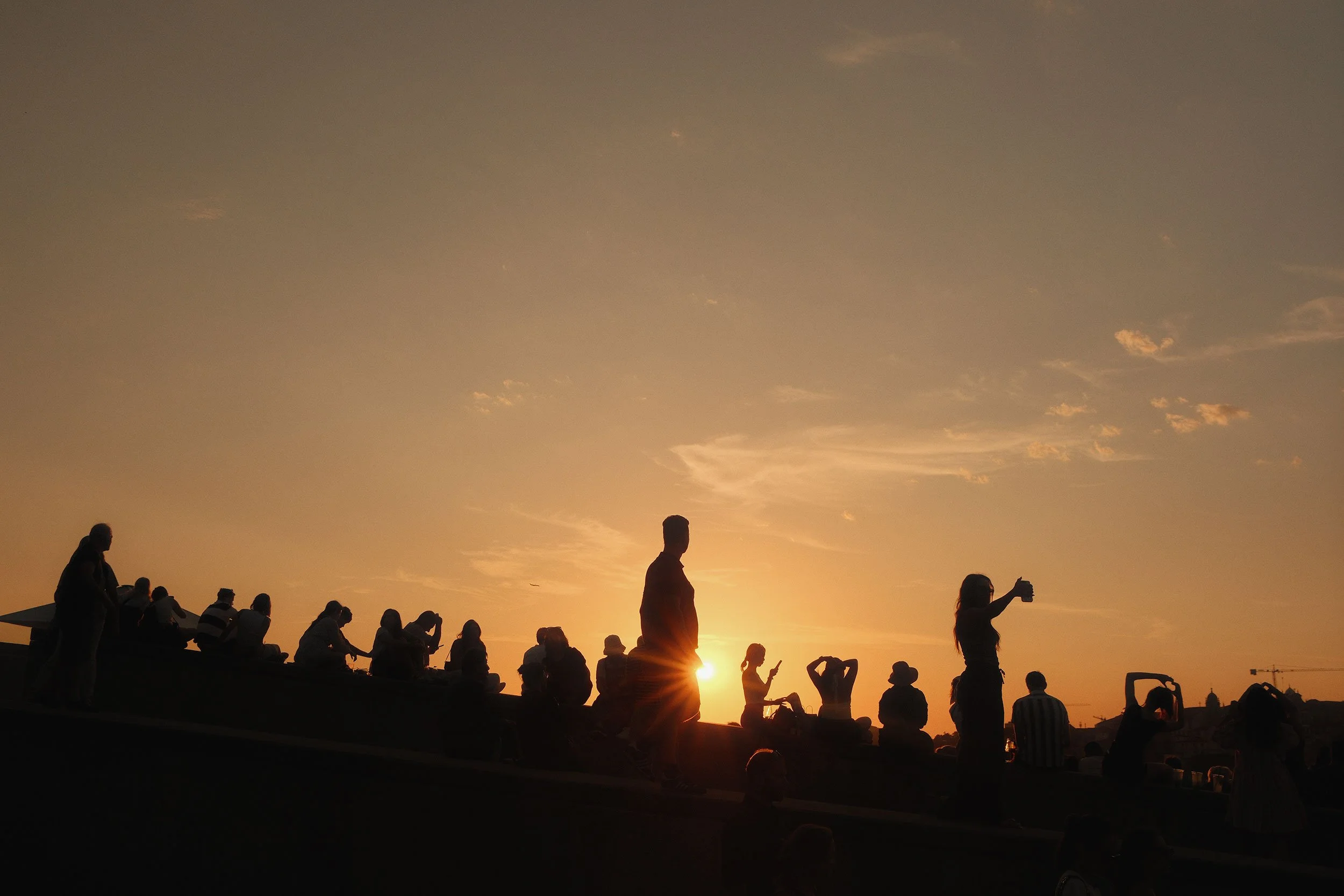
Lisbon and Porto are easily Portugal’s most popular destinations for photographers. And it’s justified: both cities are beautiful and offer a wealth of opportunities for stunning photography. I’ve been to both locations twice, and I previously wrote tips and practical advice for Lisbon if you plan to visit. With Porto being the easy and logical addition to a trip to Portugal, I thought I’d do the same for Porto. But since Porto is north of Lisbon, keep a few important things in mind. It’s still in Portugal, sure, but things are quite different when you reach Porto.
A direct train from Lisbon puts you there without much hassle, and it’s become something of a bucket-list stop for travellers and photographers alike. But despite being just a couple of hours from Lisbon, it’s a genuinely different city to photograph. I’ve now seen enough of it in two very different conditions to actually speak to what you’re getting into.
A Smaller City With a Different Rhythm
Porto’s population sits at a bit over 273,000, less than half of Lisbon’s, and that difference is felt the moment you start walking around. Where Lisbon sits across different neighbourhoods with their own personalities, and many hills that can genuinely wear you out over a few days, Porto feels more contained and easier to consider as a single, connected place. That doesn’t mean there’s less excitement or things to photograph, and it certainly has hills; it just comes at a different pace, and a shorter visit here can feel complete in a way that Lisbon, with its variation and sprawl, sometimes doesn’t. All this can be a good thing. A few days in Porto can be enough to gain a more thorough understanding of the city. Lisbon may take longer to do the same.
The Weather Is the First Thing to Plan Around
The weather is probably one of the first things to surprise you, especially if you’re coming from Lisbon. Porto sits farther north and is more exposed to Atlantic systems than Lisbon: more cloud cover, more rain, considerably less predictable sun. A storm defined my first visit here. Difficult conditions for photography, since light plays such a central role in how I work, and Porto can be unforgiving in that respect if the weather doesn’t cooperate, at least for me. However, embracing the rain and overcast weather can prove beneficial. The weather is a characteristic of the city; you have to be mindful of how you approach weather that isn’t typical of Lisbon. Now, Porto does have great weather; don’t expect it to be gloomy all the time. It’s just very much less predictable than Lisbon.
The Ribeira District and the Waterfront
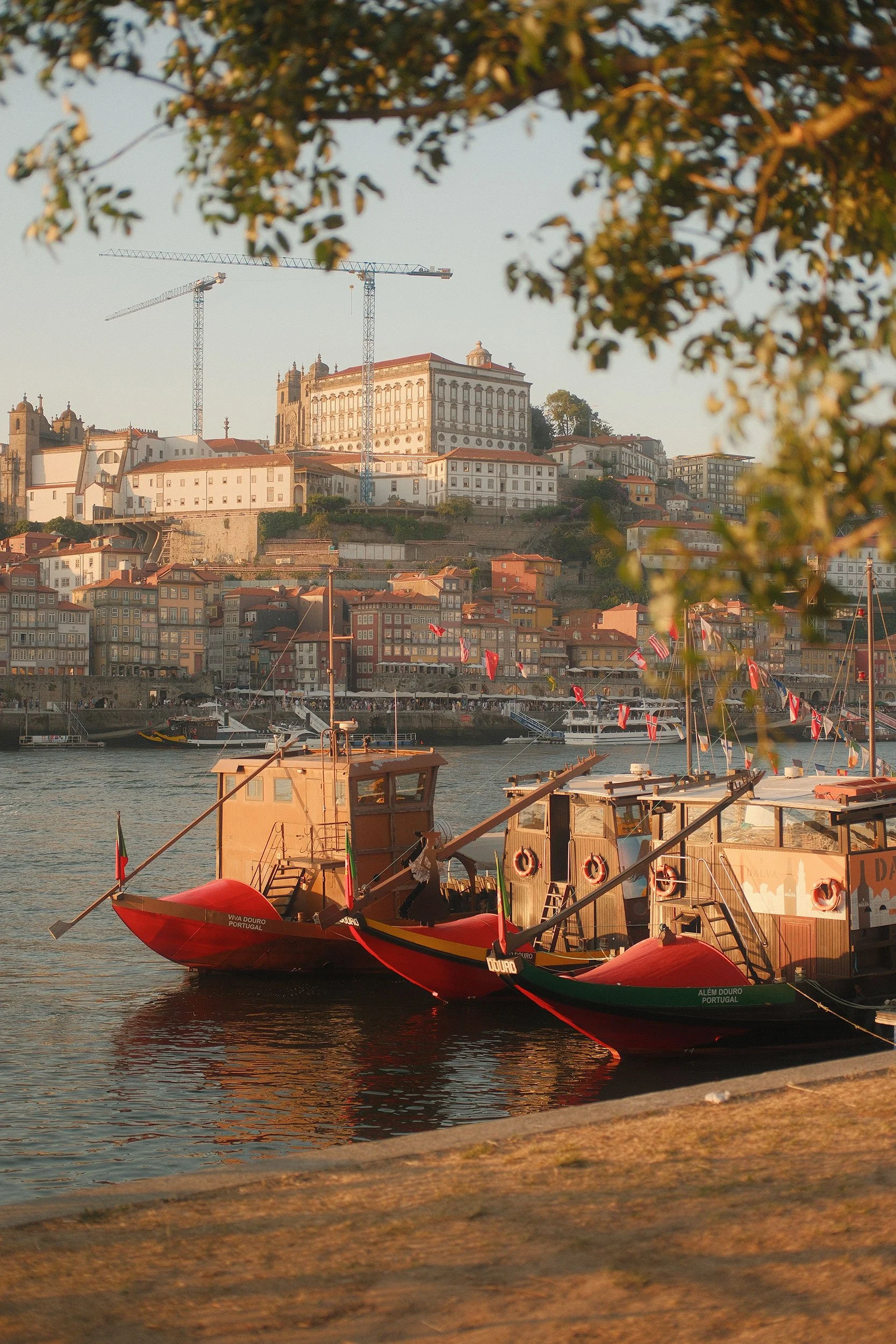
The city centres heavily around the Douro River, and you’ll inevitably be drawn to it when you are there. It’s hard to miss. It’s lively, the views are fantastic, and it’s beautiful. Ribeira is where much of Porto’s character and photographic opportunities actually live: narrow streets, colourful old buildings tight against the hillside, and shops and restaurants. It’s also, unsurprisingly, one of the more crowded parts of the city, especially in the afternoon. Want it without the crowds working against your compositions? Get there early. Sunrise and sunset can be exceptionally captivating here.
This area benefits from some exploration. Crossing over to Vila Nova de Gaia gives you the view back across the river toward Ribeira’s colourful facades, but there’s plenty to shoot on the Porto side too if you’re patient. It can get hilly here, so keep that in mind, but I’d strongly suggest taking the time to wander through alleys and passageways, as there is plenty to discover that isn’t necessarily on a list of places to see. Take your time here. It’s really a great area for photography.
Porto’s São Bento Train Station
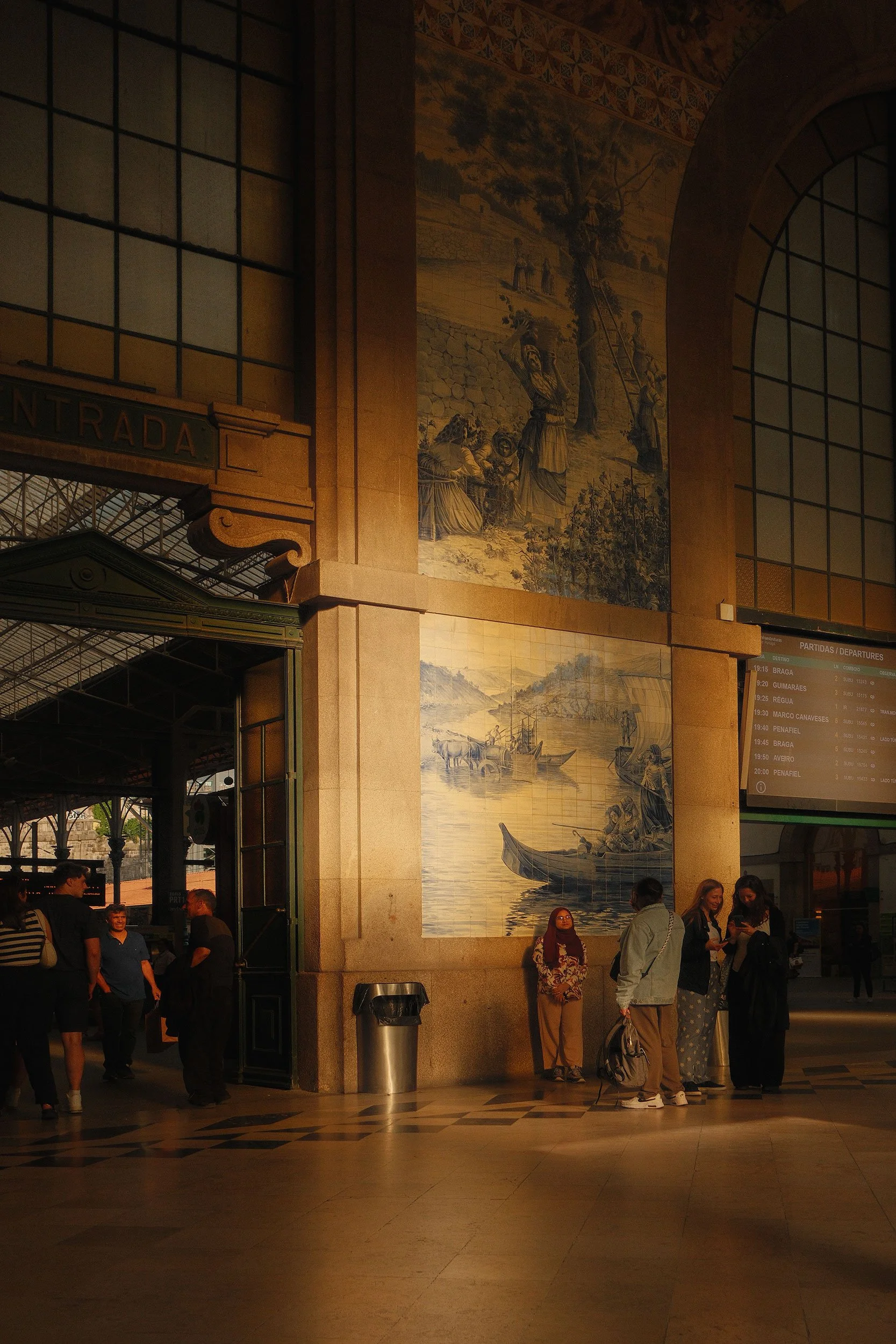
Porto’s São Bento train station is worth a stop even if you’re not catching a train there, and the majority of visitors are not. It’s easy to get there as it’s directly in the city and close to the Luís I Bridge. There isn’t much ground to cover, but the interior is covered in large azulejo tile murals. There will probably be a good number of people here at any time, and it’s a small footprint. Fortunately, the murals are high so that you can enjoy the views without much distraction. This is a place where colour and shape come into play. Silhouettes of people against the light through windows. It’s a completely different kind of photographic opportunity from anything along the river.
Getting To Porto and Around the City
Transport-wise, Porto is straightforward. Direct train connections from Lisbon and other cities in Portugal make it an easy add-on to a Portugal itinerary. Once you’re in the city, the waterfront areas and historic centre are close enough together that walking covers most of what you’ll want to photograph. It’s a noticeably easier city to navigate on foot than Lisbon. It’s smaller and doesn’t have the insane, continuous inclines like Lisbon; however, some streets around Ribeira do get steep and narrow enough that comfortable, grippy footwear still matters.
Conclusion
If there’s one thing worth internalizing before visiting Porto specifically for photography, it’s that the weather here deserves more respect than it might get elsewhere in Portugal. Keep that in mind when you have limited time, since you can’t assume every day will provide usable light. I find there is a noticeable adjustment period when switching from sunny weather to rain. You really need to approach it differently.
But when the light is at its best, Porto is stunning in a different way than Lisbon, and having such different personalities in two cities within the same country is rewarding. Photography here can give you some of the most distinct, colourful scenes anywhere in the country.