The Perfect Companion: Why 23mm Still Defines My Travels
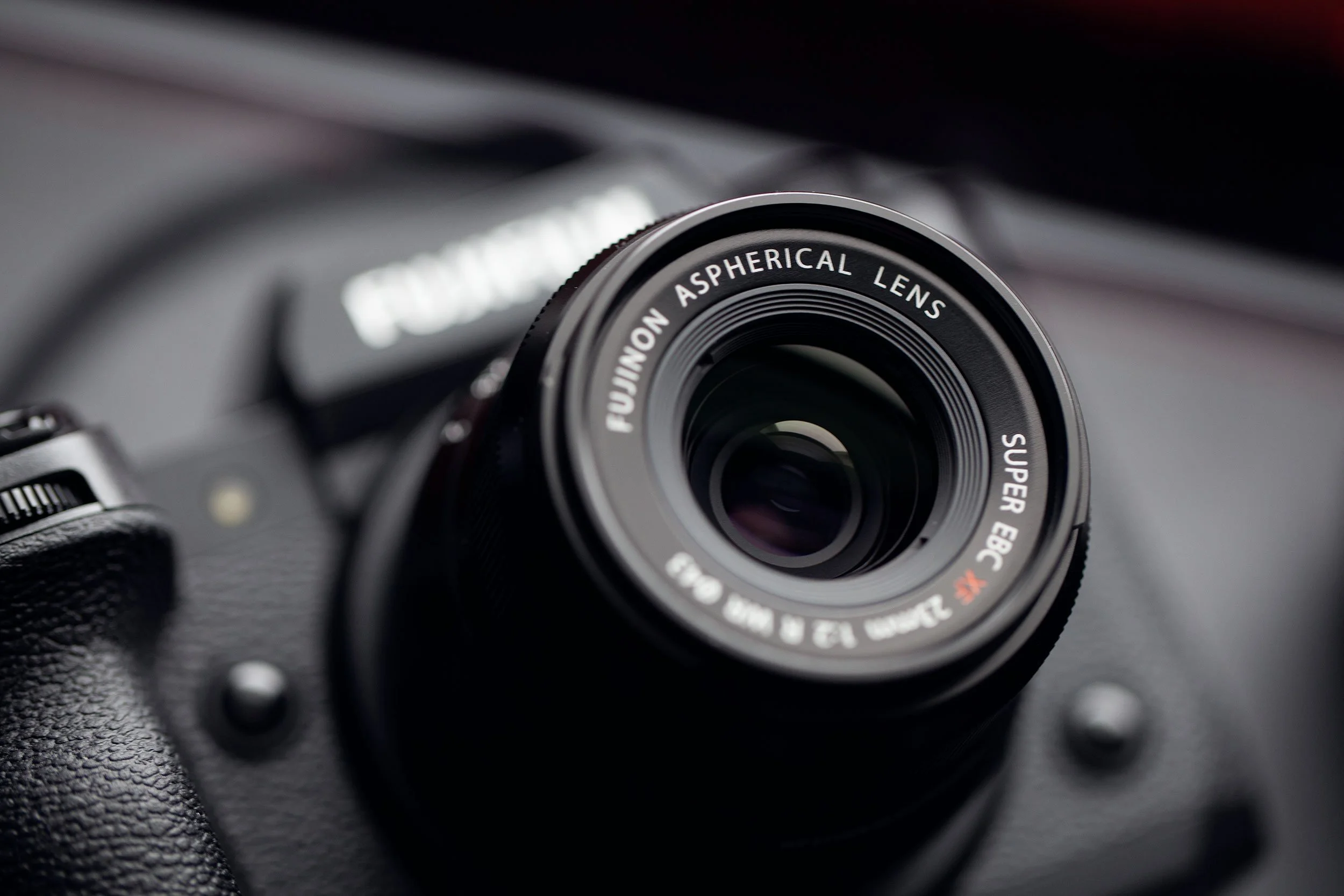
When I first placed my order for the 23mm lens, I thought it would become my secondary lens for travel photography when I needed something wider. I had the 35mm on the X-E4, but when I sold it and replaced it with the X-H2, I wanted at least one more lens. The 35mm was good, but I knew that when I travelled, I would like some choice, but at the same time, I didn’t want anything large. I had a kit lens that I got with the X-E2, and it was good, but I was honestly getting sick of zoom lenses. I enjoyed a little more flexibility with the zoom, sure, but I was getting tired of the size, and this wasn’t a big lens! So when I sold that kit lens on a cold January day, I immediately went home to start looking for my next lens.
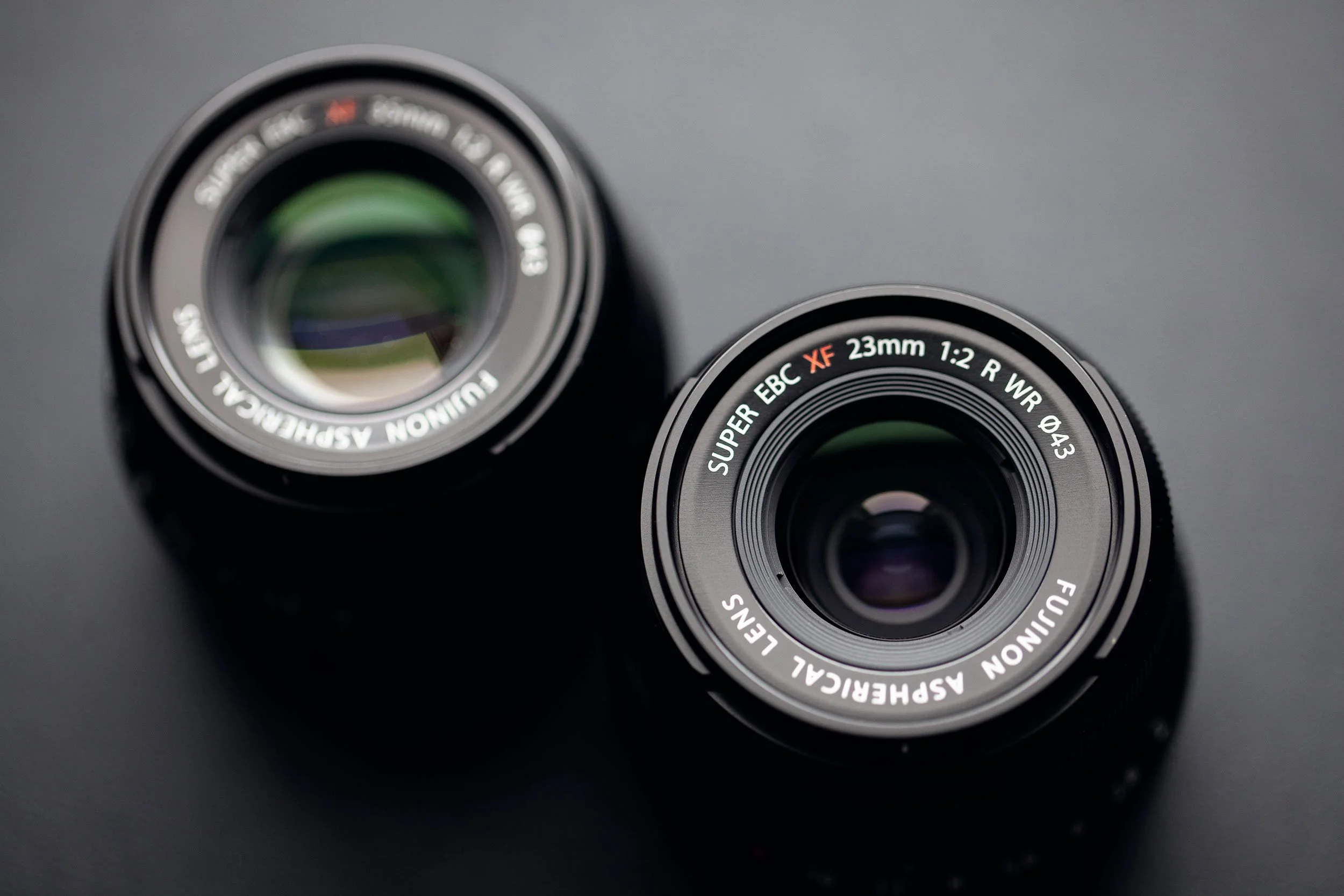
The 35mm is a good everyday lens working in a variety of shooting scenarios, and I wanted something just as versatile. Checking out the 233mm, I liked the size, which is pretty much the same as the 35mm, and the f/2 aperture, which would be great for low light. So small, capable, and affordable. I ordered it, and a week later it arrived. From the first week of using it, it has rarely been off my camera body.
It Fits My Travel Vision Better Than 35mm
At first, I thought the 23mm could be too wide, but on the X-H2 it isn’t at all. In fact, I find it a more comfortable framing than the 35mm. Now, when I go back and try the 35mm, I frequently find it way too tight. You have to make those mental adjustments with any lens, but sometimes it feels alarming how tight it gets. This isn’t to say that 35mm is a bad focal length; it’s just not right for me most of the time. 23mm is an excellent lens for me and is a much better choice for a minimal setup. A 23mm focal length on this camera is more in line with how I see things, and what’s in front of me on my travels, and creating an image the way I experience it is an essential part of meaningful photography.
It Shines for Architecture, Streets, and Tight Travel Spaces
Regarding subjects, I think the 23mm excels at architecture and street scenes. For buildings, you can capture more of it, and for street scenes, especially when shooting vertically, you can get a better sense of the size and distance, in my opinion. This is especially useful in tight quarters, which are common in the various European cities I visit. The cities are older, and the streets and passageways can be narrow. Something interesting can be around every corner. A focal length wider than 35mm is also very helpful indoors. You can be pretty limited in movement indoors, and if a sense of size is important, the 23mm is much more versatile.
One of the most important things about 23mm is that it isn’t ultrawide. Ultrawide lenses can be severely limiting for travel, as image distortion can be very distracting and make it difficult to gauge scale. Since 23mm is not too wide, taking a few steps towards something can help if I want to go tighter, unless the scene is expansive.
It Doesn’t Do the Work For Me
It’s evident that any prime lens imposes a limitation, one without zoom. You have to do more work to create a composition that works. Using only 23mm allows me to create a scene not just as I better envision it, but also to work for the benefit, as it’s my only choice. I’m not zooming and trying different captures, poring over different focal lengths of the same scene. As a result, I don’t have numerous, slightly different photos to pore over when I get home. Some may think that’s a limitation, as I have to go with what I captured, but I don’t. Even though I could crop if I wanted, I rarely do. If a scene works, I go with it; if it doesn’t, I move on. I’d rather consider the photos as I saw them in the moment. Not exclusive to 23mm, but having a prime I am comfortable with nudges me toward more deliberation.
It’s Perfect for Lightweight Travel
I travel light now, dipping into a minimalist approach to travel photography. My days of multiple lenses and bigger cameras are over. The X-H2 and the 23mm together are a very compact package that isn’t intrusive or heavy. Thinking back on the DSLR with sometimes three lenses, contrasted to what I use today, is a stark difference. You learn from experience, and you adapt to what is most comfortable for you, and I’ve moved to the compact size of a small prime lens. The 23mm is very small and very capable. When I find something I like, I tend to stick with it. As they say, the best camera is the one you have with you, but the best lens is the one that isn’t a pain to use all day: less gear, less weight, more immersion.
Conclusion
A 23mm focal length helps me capture everything I enjoy about travel photography. It’s a focal length better aligned with my vision. In addition, it’s small, competent, well-built, and affordable. Many of my favourite travel images use this focal length, providing consistency in my work. Having a single focal length helps me better imagine the scene in front of me; there isn’t much mental adjustment or deliberation, which is beneficial during travel, as spontaneity is sometimes necessary.