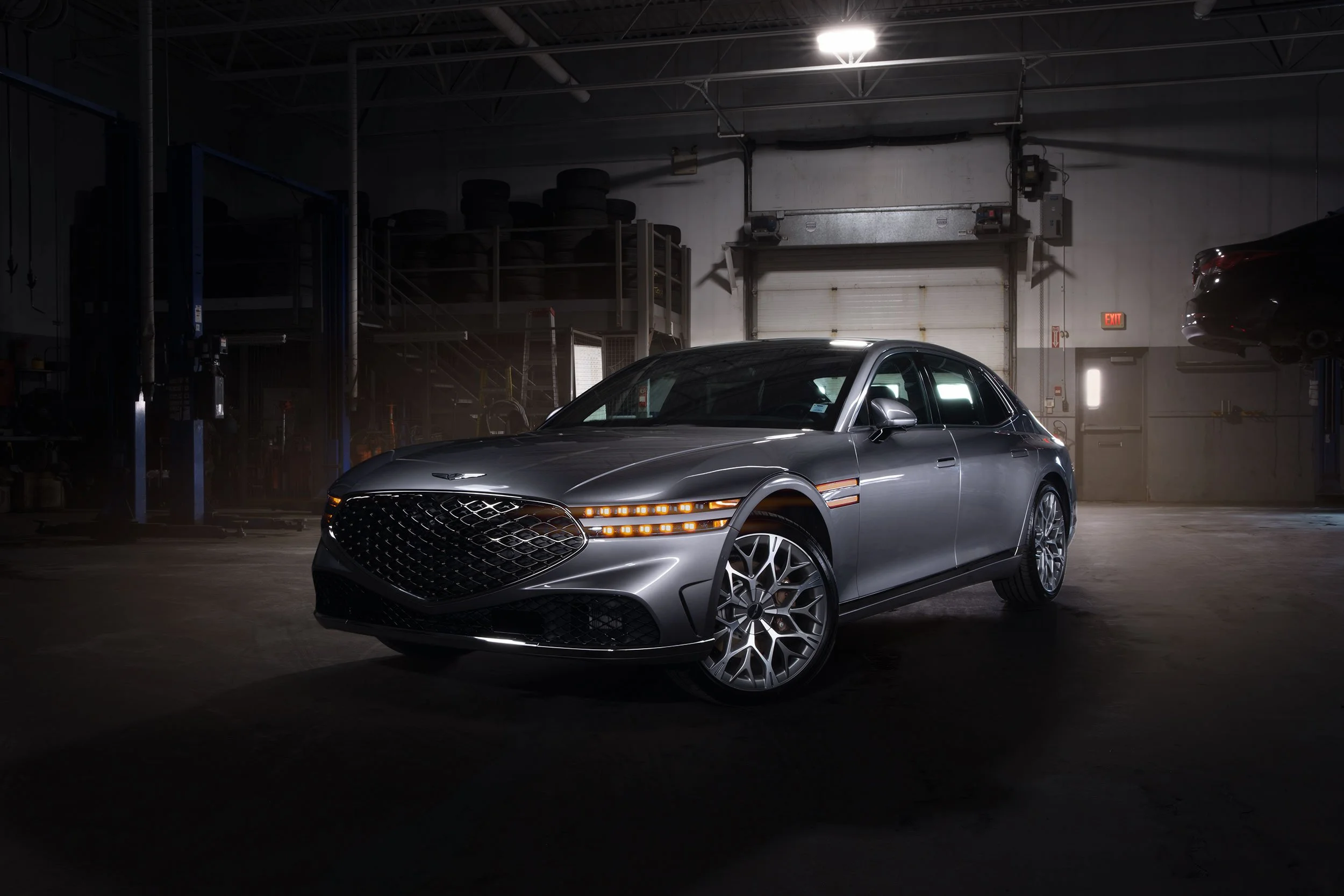
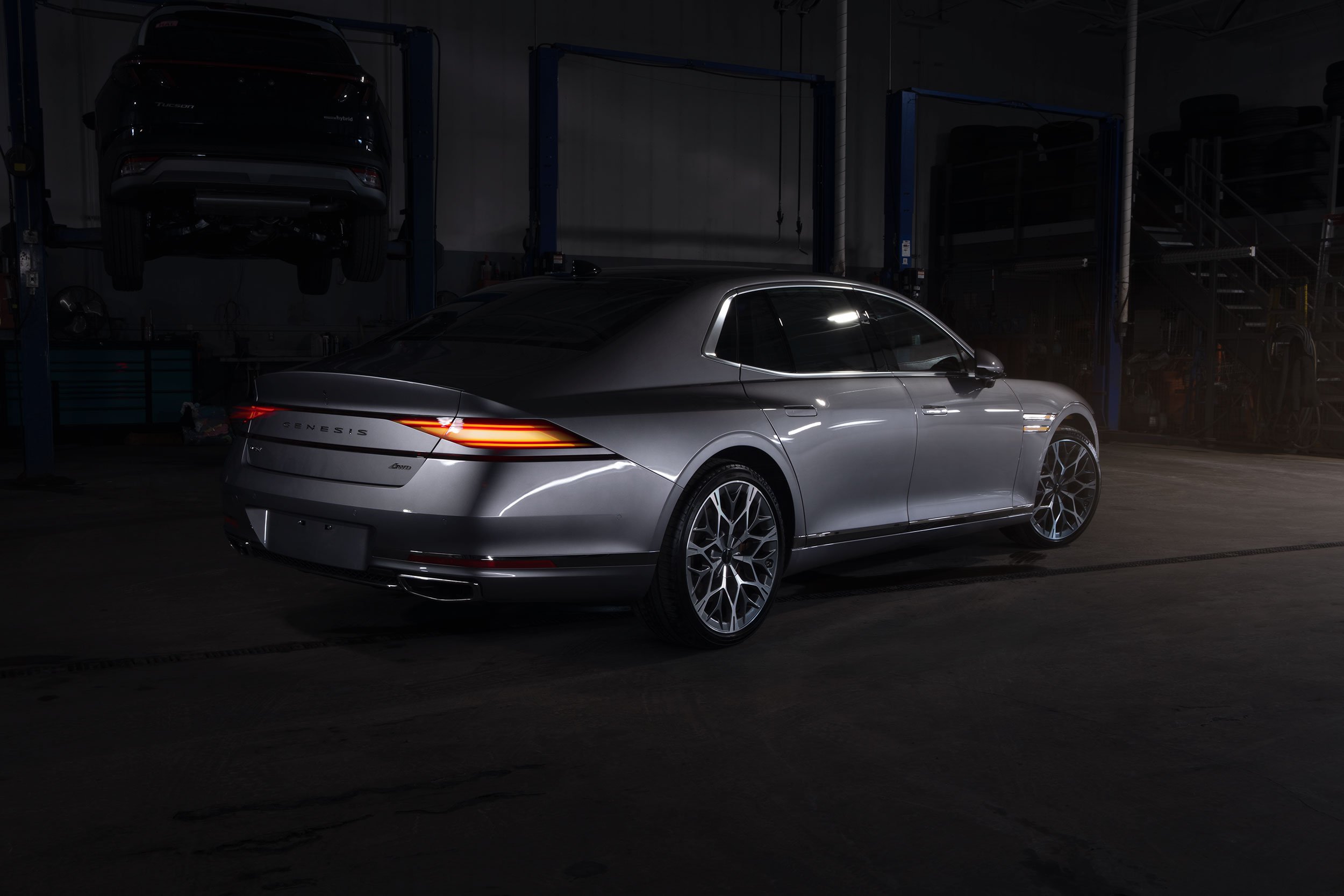
2026 Genesis G90 Photo Shoot
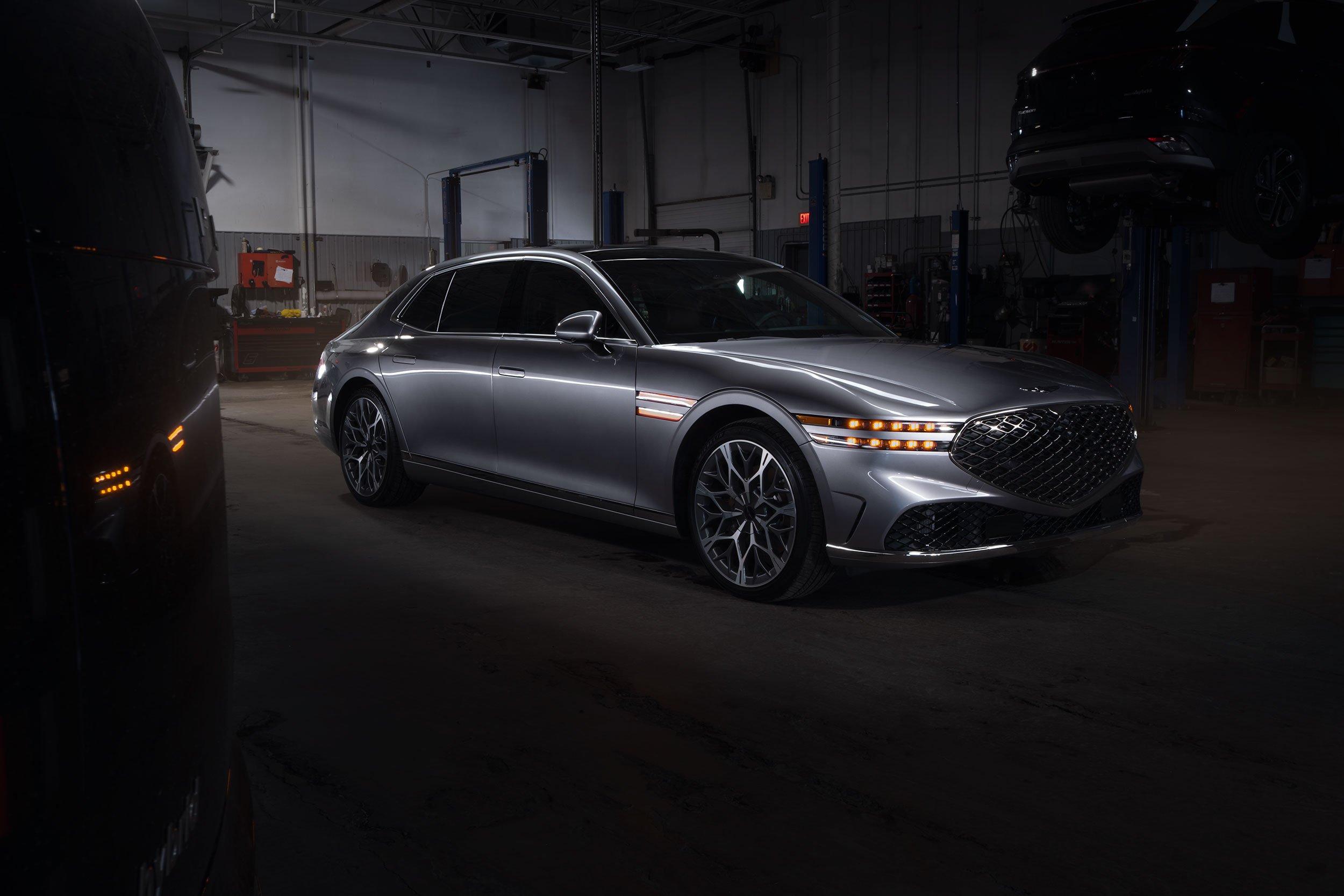
2026 Genesis G90
It’s been almost three years since I shot a similar model, a 2023 Genesis G90, and although not much has changed on the outside, three years of tech advancements can be substantial. I had a short window with this G90, a custom order in Savile Silver, as the owner was due for delivery on Monday.
The 2023 and 2026 Genesis G90 share the same basic platform and twin‑turbo 3.5-litre V6 powertrain, but they approach the flagship luxury brief with slightly different priorities. The 2023 model introduced the current G90 design language, with its bold crest grille, two‑line LED headlights, and long, stately profile that presented the model as an upmarket, luxury offering.
Under the hood, there was a 375 hp standard version and a more potent 409 hp setup paired with a 48‑volt e‑Supercharger mild‑hybrid system, both backed by an 8‑speed automatic and all‑wheel drive. Ride quality was tuned for comfort, with adaptive suspension and a focus on isolating occupants from the outside world.
This second-generation G90 arrived with an interior many considered a bargain Mercedes S‑Class, with Nappa leather, genuine wood and metal trim, and deeply comfortable rear seats that could recline, heat, ventilate, and massage. It was packed in advanced tech, including a full suite of driver‑assistance features, advanced cruise control and lane-centering, plenty of parking aids, and premium audio. The overall impression was of a car that finally put Genesis on the map to compete with German flagships, but at a price that undercut them when similarly equipped.
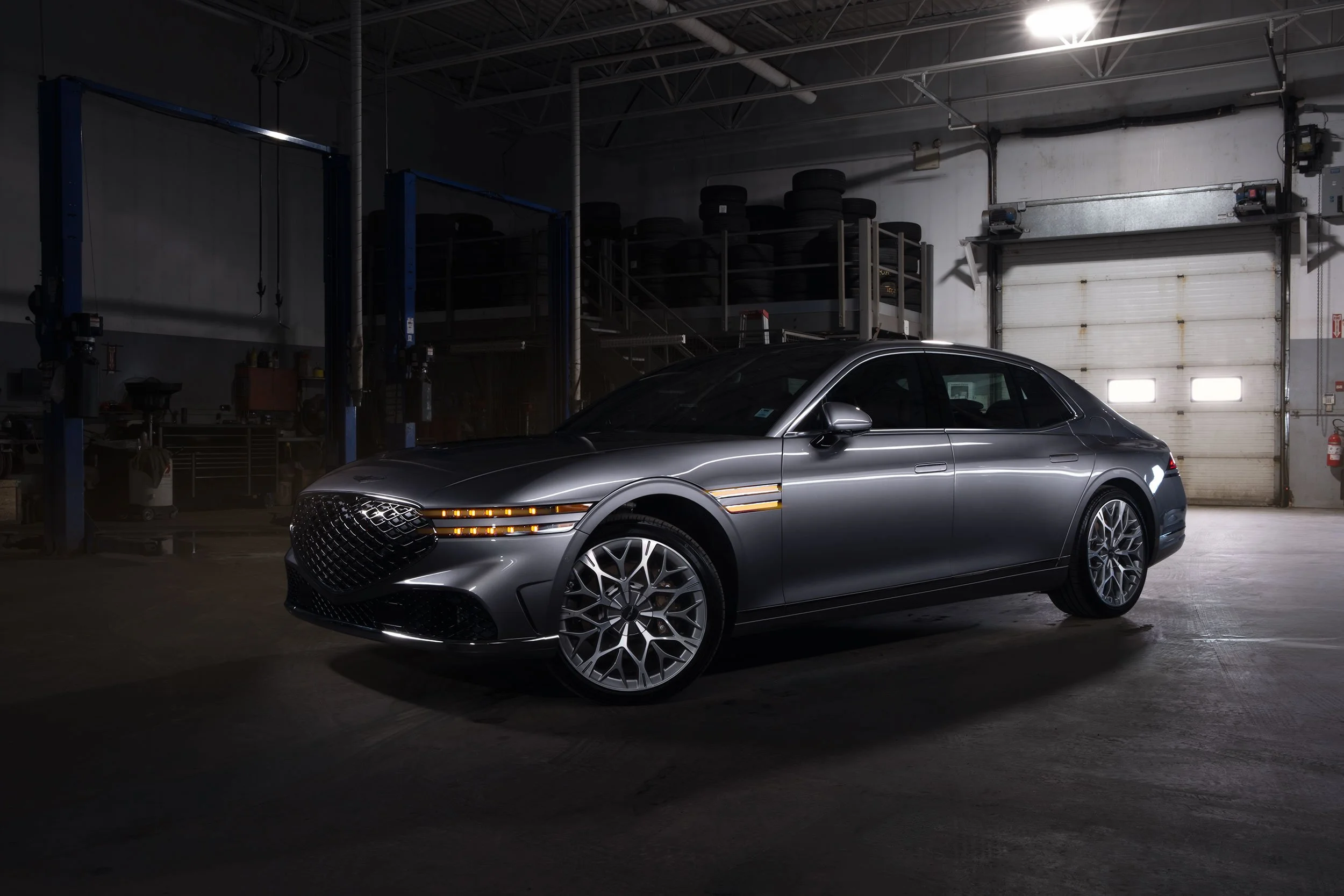
The 2026 G90 is still based on the same platform and continues with the twin‑turbo 3.5-litre V6 and an available e‑Supercharger mild‑hybrid system, again paired with an 8‑speed automatic and all‑wheel drive. The 2026 model refines the ride and handling with greater emphasis on a multi‑chamber air suspension and adaptive damping, which allows the car to better tailor to driving conditions.
At a glance, the 2026 G90 still looks very much like the car that debuted in 2023, and the interior refines what was already successful, introducing a few additional features. The 2026 version continues with ultra‑soft Nappa leather, rich wood, and meticulously finished metal details, but places greater emphasis on features like the Mood Curator, an integrated system that coordinates seat massage, ambient lighting, and fragrances to create different in‑cabin atmospheres. Massaging seats with multiple programs and 10 air pockets are now heavily marketed as a core comfort feature, and rear passengers get more control with an 8‑inch touchscreen integrated into the center armrest. From that interface, they can adjust seating, climate, window shades, and ambient lighting.
Smart Cruise Control learns your driving style; Highway Driving Assist refines semi‑autonomous driving on compatible roads; and systems such as Blind‑Spot View Monitor, Safe Exit Assist, and Rear Cross‑Traffic Collision‑Avoidance are more tightly integrated. The self‑opening and self‑closing power doors are now a core part of the G90 experience, featuring an easy, soft close experience.
The 2026 model is a refinement of the 2023 model, with innovative tech and more polished comfort and safety features, and establishes itself as a competitor to the top models from major premium brands, rivalling the Mercedes‑Benz S‑Class and BMW 7 Series.
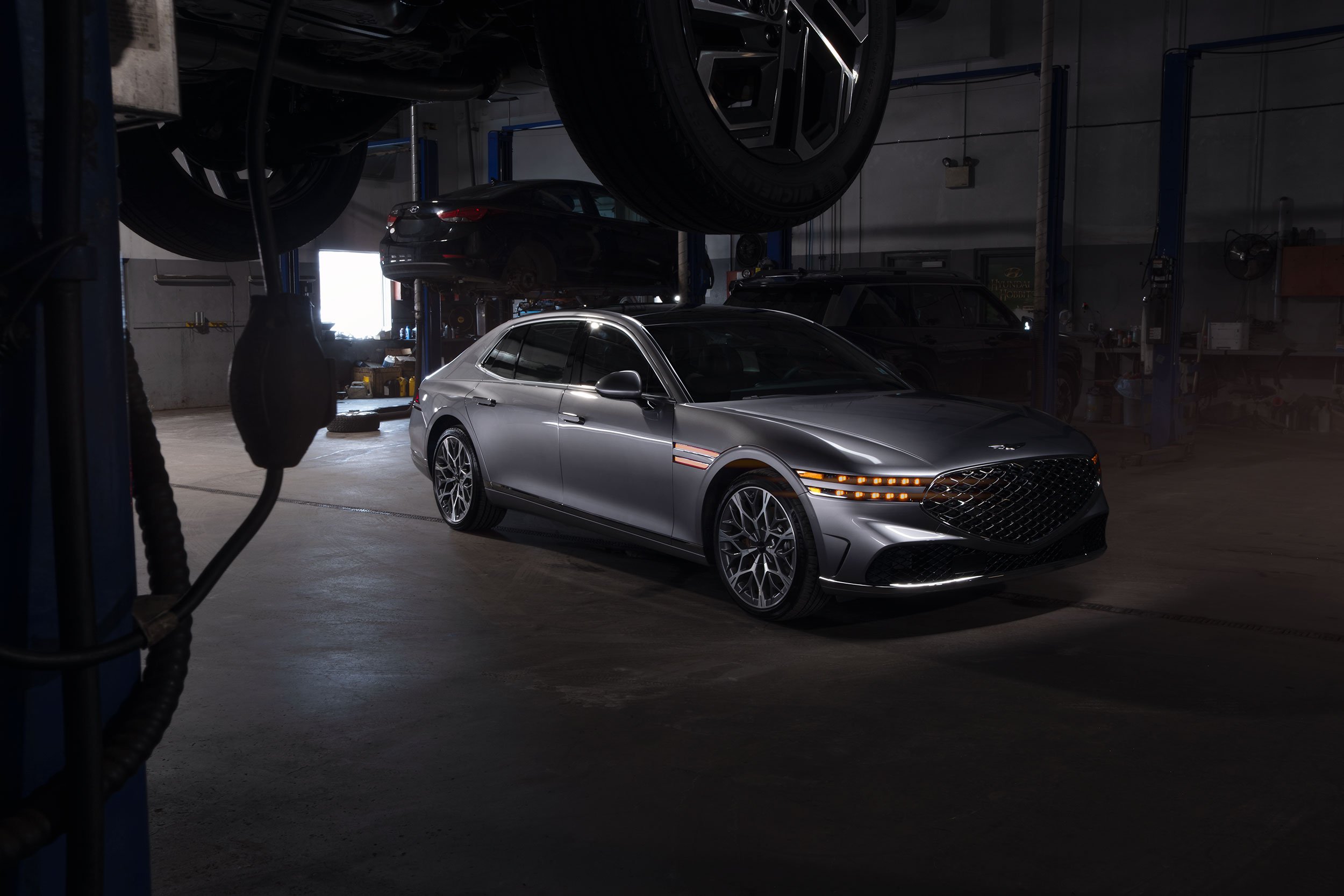
The Shoot
My window to shoot this project was very tight. The car was due for delivery to the customer on Monday, and I was only approached about the shoot on Friday. This shoot itself took place last week. I was shooting inside, which had to be during working hours. Thankfully, service is usually closed or limited at dealerships on Saturdays, but my window introduced another constraint: time of day.
There wasn’t any direct sunlight, but it was still bright enough that I was limited in how dark I could make the environment. The service bay has large doors and a few windows, plus overhead lights that stay on. I’m sure they can be turned off, but with what felt like an endless number of switches scattered around the bay, neither I nor anyone else could figure out which ones controlled them.
Light painting in a brighter environment is tricky. The extra ambient light really limits how long the exposure can stay open to “paint” the car. In this case, I was capped at about 10 seconds per exposure, with some dropping to 8 seconds. To make it work, I shot at f/16 and pulled the ISO all the way down to 64, an ISO setting I’ve never had to use before. I’m very glad I’ve fully transitioned to the Fujifilm X‑H2 for all my photography, because pulling this off with my old Canon would have been almost impossible.
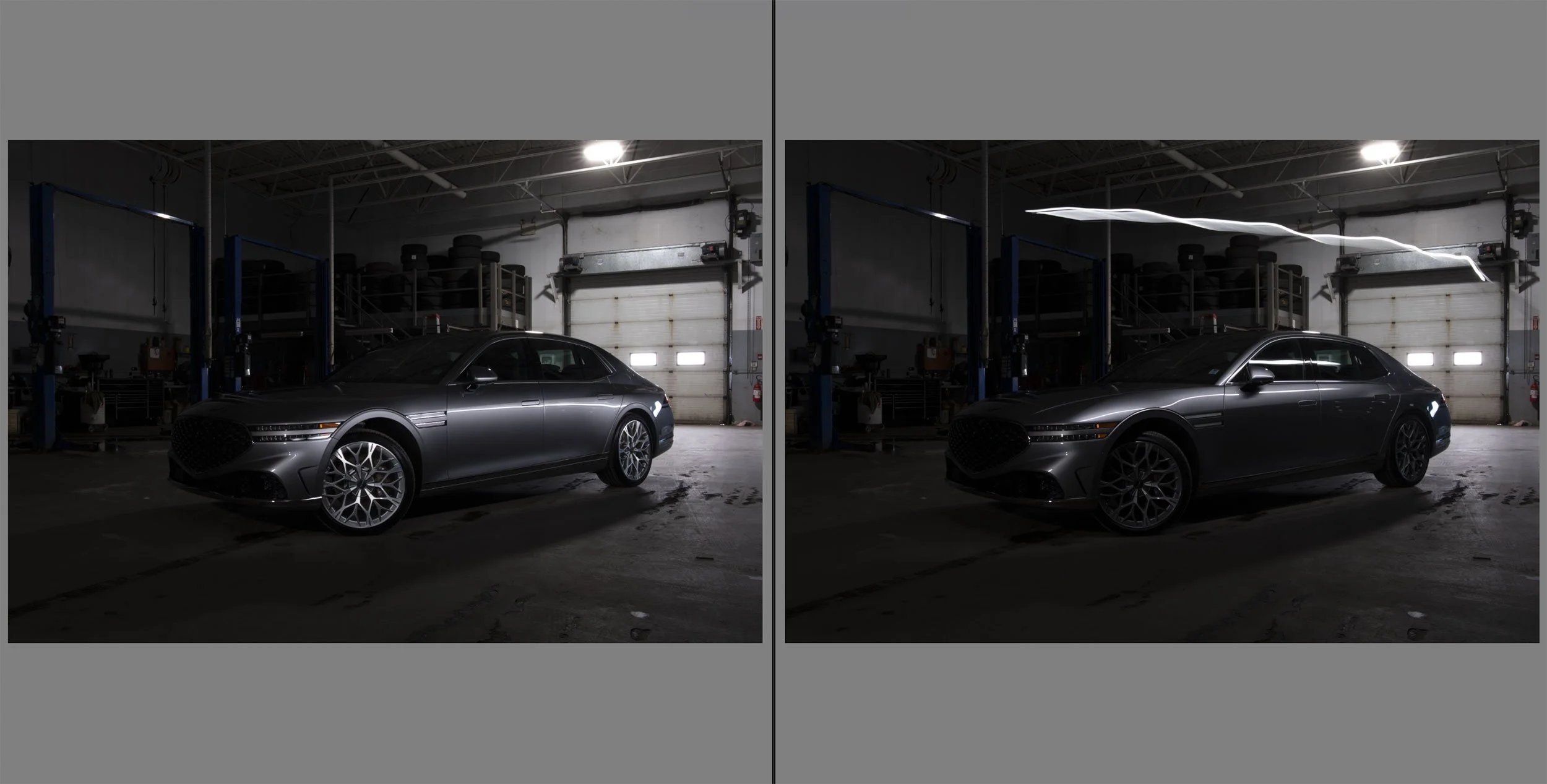
Side and top outline exposures
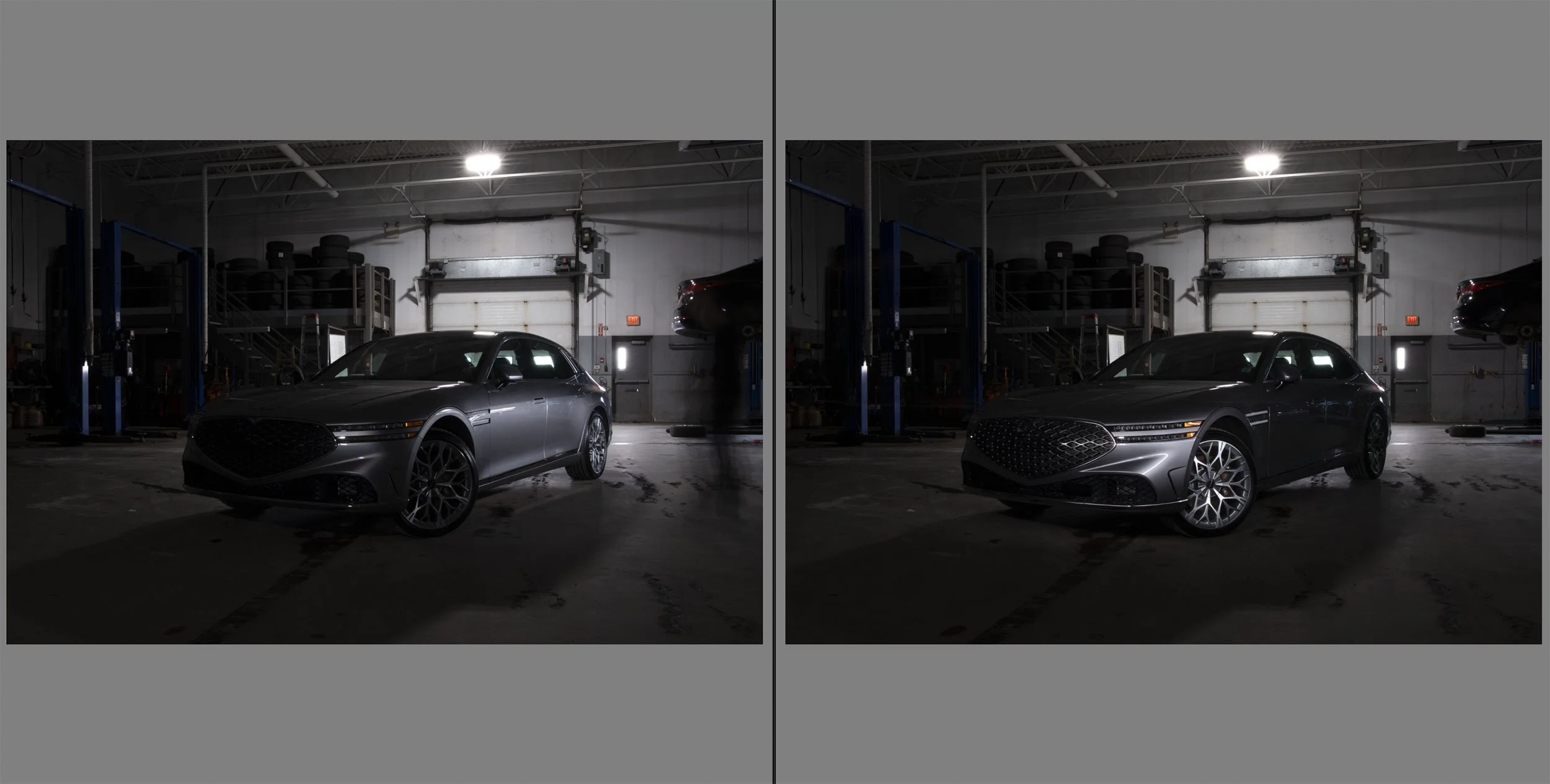
Side and front wheel exposures
Each final image is built from three to six separate exposures selected in Lightroom and edited in Photoshop as layers. Once those layers were blended and edited, I merged them into a single group for organization and created a new blank layer on top as a cleanup layer. Service bays are frequently messy: stains and puddles on the floor, random tools, and all kinds of visual clutter in the background. The purpose was to clean it up, but not to make it completely spotless and immaculate.
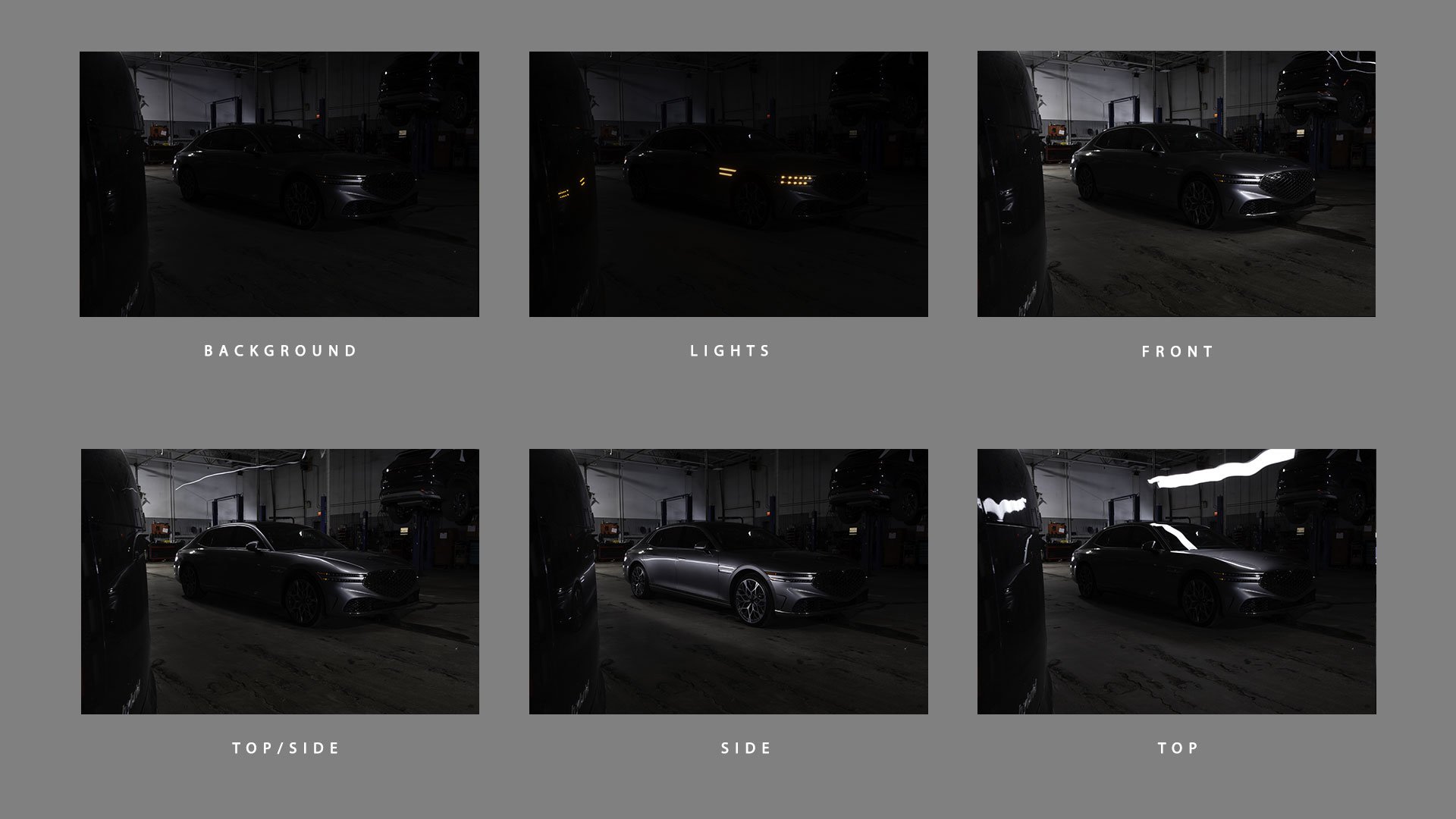
Exposures used
Conclusion
When shooting for a client, it’s important to realize that not everything is going to be perfect. The environment might not be exactly what you hoped for; in this case, not dark enough, and changing locations may not be an option. In that case, you need to adapt and understand what you are working with and how to bring it to life, capturing the exposures you need to achieve the vision you require.
Working in brighter conditions, under fixed overhead lights, forced me to adapt my process. Still, it reinforced why I love this style of photography: it lets me create something dramatic and intentional from an everyday environment.
If you’re interested in a deeper dive into my approach, from planning and gear to post‑processing and compositing, I cover all of this in much more detail in my book, A Beginner’s Guide to Automotive Light Painting, where I break down my workflow step by step so you can apply these techniques on your own photo shoots.