Keeping It Light in Portugal: What I Packed for a 2-Week Adventure
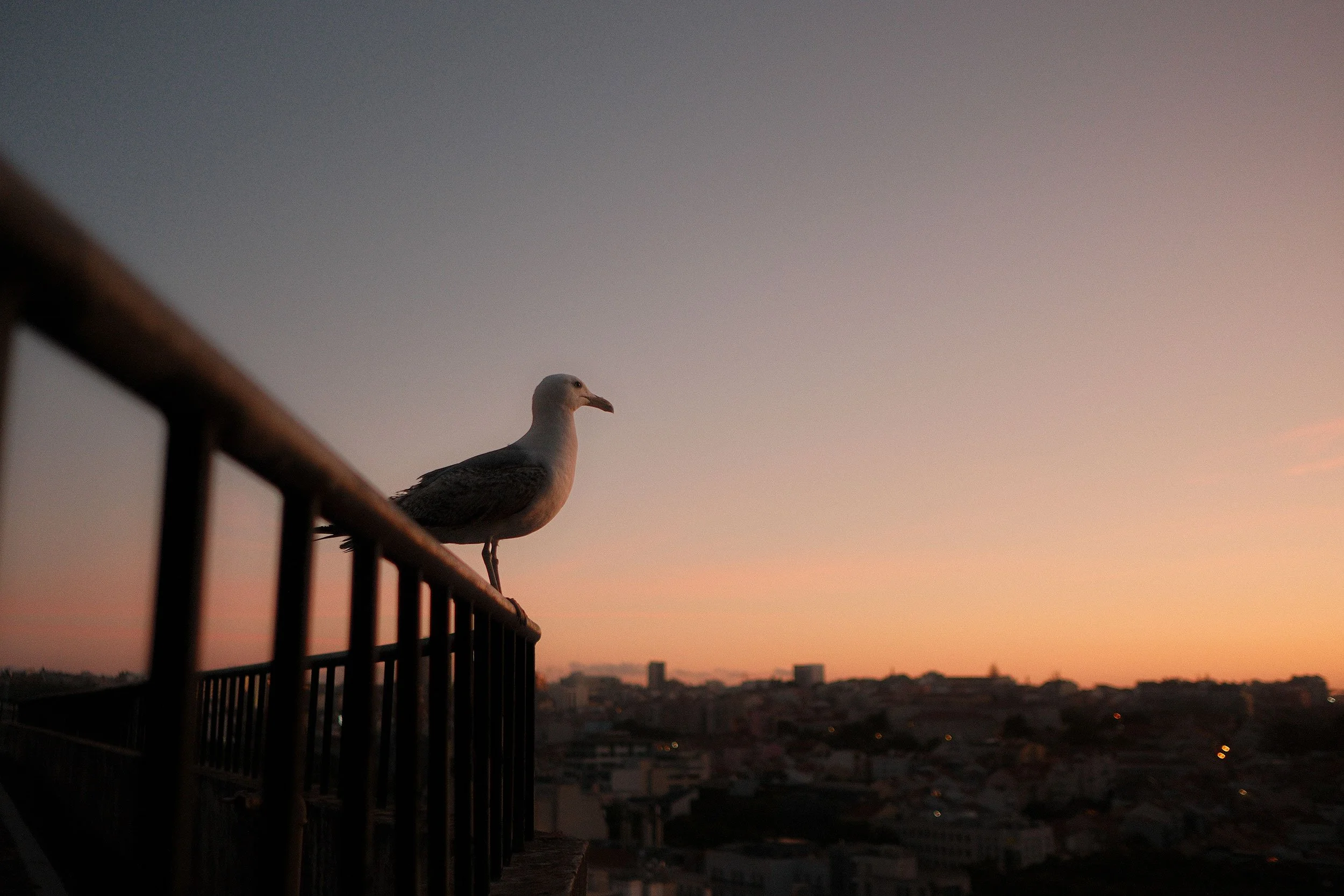
Lisbon - 2026
Travelling solo as a photographer feels like complete freedom, and in many ways, it is. But it also pushes you to be more intentional about what you carry. Travel naturally involves constant movement; as you explore a city, the steps add up quickly. You’ll navigate steep inclines, uneven terrain, and long distances on foot, while hopping between buses and trains. Then there are the inevitable hours spent waiting in airports.
When every street, train ride, and uphill viewpoint is yours to navigate alone, even a little extra weight becomes noticeable. The more you carry, the more you have to manage, think about, and keep track of, and finding the right balance between convenience and flexibility is what ultimately makes solo travel feel smooth rather than stressful.
Preparing for a solo trip is about packing the right gear for 90% of your photography situations. You can’t anticipate everything, and if you try, you won’t stay light for long before you are bogged down with heavy zoom lenses and extra bodies. When photographing while travelling, adaptation is key. You want to be covered without going overboard, prepared without being weighed down by too many options.
Being limited can actually help. Fewer options force you to get creative in composition and in how you explore. It often reveals new possibilities: you move closer, grow more curious, and dig deeper. Lightening your mental load lets you stay present and enjoy the moment more fully, and you discover more about what you like by eliminating what you are used to.
I didn’t have much gear in Portugal, and I wanted to switch between the two lenses I had to explore more creatively. I wanted to break my expectations a bit, and honestly, it worked. I loved the photos I captured. My camera bag was pretty slim, with only a few items.
Fujifilm X-H2
Technically, I own two cameras, and over the past year, I retired one. I now exclusively use the X-H2. I replaced it with the X-E4, which was an excellent camera. I upgraded to my current camera almost three years ago. If you want to know how they compare, check out Fujifilm X-H2 vs. X-E4: How Do They Compare for Travel?
In the time I’ve had this camera, it’s been fantastic. The camera is a convenient size, bigger than the X-E4, but easier to actually handle, as it has a substantial grip, and the ease and speed of switching modes, settings, and film recipes make this, in my opinion, an almost perfect choice for my travels. I don’t think about upgrading, although I’m sure I will at some point. If there is an X-H3, I will definitely give it a look, but right now, the X-H2 is awesome. I love holding the camera; I love using it, and it just works so damn well.
23mm f/2 WR and 35mm f/2 WR
Over the course of my photography life, I’ve had both zoom and fixed lenses, but mostly zooms. It just made sense at that time. With my Canon 24-105, 70-200, and 17-40, I had everything I needed covered. But that was before I started to travel more often. I will admit that having some zoom was useful in Iceland because the place is just so vast and open. Even zoomed in, it can still look pretty barren. Also, sometimes you can’t physically get any closer to things, such as when you are on a road far from your subject.
But I’ve grown to dislike using a zoom lens. I’d rather work with the focal length I have. Second, travelling with those large lenses was brutal. They are heavy, don’t fit easily in a bag, take up way too much space when they do, and stand out like crazy. I don’t want that attention. I’d rather blend in when travelling.
The 23mm is my go-to, and you can read more about why in my post, The Perfect Companion: Why 23mm Still Defines My Travels.
DJI Osmo Pocket 3
The DJI Osmo Pocket 3 was a big deal when it was launched. It seemed like everyone was using one. It’s super small, the battery lasts forever on a charge, and with one microSD card, it will easily get me through two weeks without swapping SDs. Even when it does need a charge, it takes about 10 to 15 minutes with the right power source.
For travel, the size and simplicity are the real wins. Rotate the screen, and it’s ready; flip it down when you’re done, and it’s off. Easy to operate, and easy to slip in and out of the camera bag or my pocket. I can take my video clips all day without worry.
It has a small tripod if needed and an extended battery; however, I don’t even travel with it, since I’ve never needed it. This is the best little video device I have ever used. I don’t do much video, but when I do, this little device is the way to go.
In Closing
This setup works for me. It won’t necessarily work for you. If you like the compositions I choose in my photography and the video recaps I do, then maybe it will! However, everyone approaches photography differently, which is the great thing about it. It’s completely up to you.
My goal, other than capturing great shots, is not to be burdened by what I have. I don’t want it to be too heavy, and I really don’t want to consider too many options. I want to enjoy my time walking around and discovering.
Travelling comfortably means staying light and focused, especially when exploring for hours. Having too much can turn those hours into a slog. The real sweet spot is a minimal kit that covers most situations. That way, you keep the freedom to wander, react quickly to scenes, and still capture great photos.