Spain with the Fujifilm X-H2
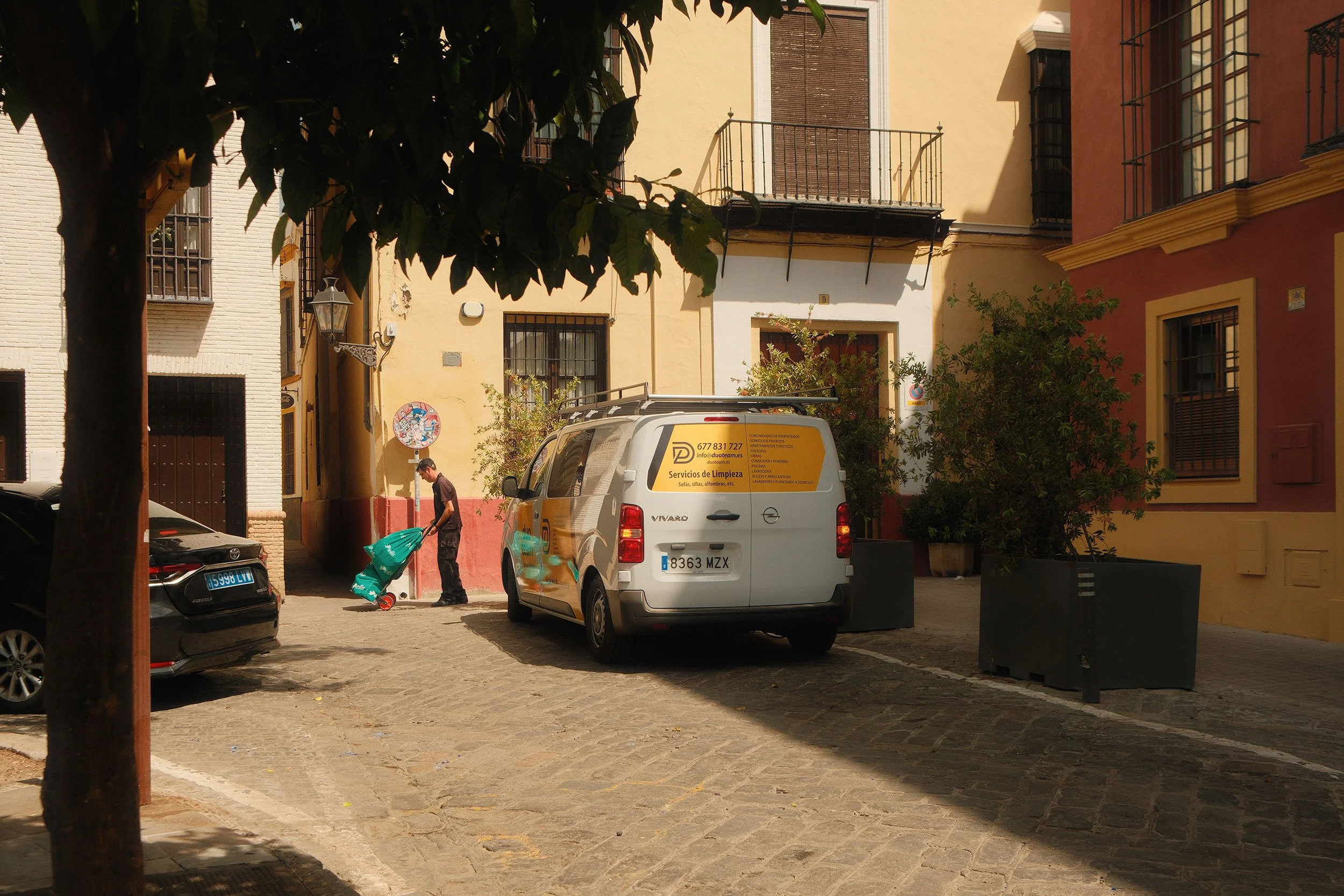
Seville, Spain
I had the opportunity to explore and photograph Seville and Malaga during my recent travels in June. These two locations are two places I have been looking forward to visiting. Seville has been on my list for a few years now, and Malaga, with its proximity to Seville, was an easy decision to include on this trip.
I travel light with gear, but I brought two camera bags for this trip: my Thule backpack and the Think Tank Retrospective 7, which I strategically packed in my carry-on. I used the Thule most days, and at first, I thought bringing a second bag was a useless decision. However, I used it for the final three days and found it a good option. Both camera bags had their advantages and disadvantages, but I’m glad I brought both.
Southern Spain in early June is very hot, and carrying a backpack with straps on both shoulders is comfortable and holds a lot; however, wearing a backpack against your back for hours at a time in temperatures of 30 degrees or higher can get sweaty. On the other hand, a shoulder bag is not directly against your back, but it’s smaller, and even slight weight can become fatiguing when it’s on one shoulder. However, a shoulder bag is easier to use quickly; it’s a convenient choice if you don’t mind switching shoulders occasionally.
With the Fujifilm X-H2, I had two lenses as usual: the 35mm F2 and the 23mm F2. I used the 35mm lens for about an hour total at most; the remaining time over the two days was exclusively spent with the 23mm lens. I’ve continually tried to love the 35 mm, and maybe that time will come, but I usually find the 35mm too tight for my liking. It’s a great lens, for sure, but for my preferred style, I much prefer the 23mm.
For aperture, I mainly shot at f/5.6 to f/8.0 to maintain sharpness throughout; however, I occasionally shot at f/2.0 to isolate the subject. The minimum shutter speed is set at 200/sec. I was shooting RAW + JPEG the entire time; however, I’m considering switching this up.
For exposure compensation, I adjusted as needed, depending on the conditions. I was shooting with my K&F Concept 43mm Polarizing Filter, so the exposure occasionally required a slight boost. When I wanted a stronger contrast between the bright areas and the shadows, I would substantially underexpose to a point where the highlights looked good to me. This created a strong and pleasing contrast.
I think it’s essential to maintain a balance throughout a body of work, as a similar aesthetic in one city, for example, brings balance throughout the work, helping to relate the images and create cohesive placement. I stuck with two recipes, one for Seville and one for Malaga. Spain is a colourful place with a warm palette, and I wanted to accentuate that in my images. I used a dynamic range of 400% on most shots. My camera was set to default to DR400%; however, I adjusted to DR100% when I wanted to deepen the shadows and hide detail within.
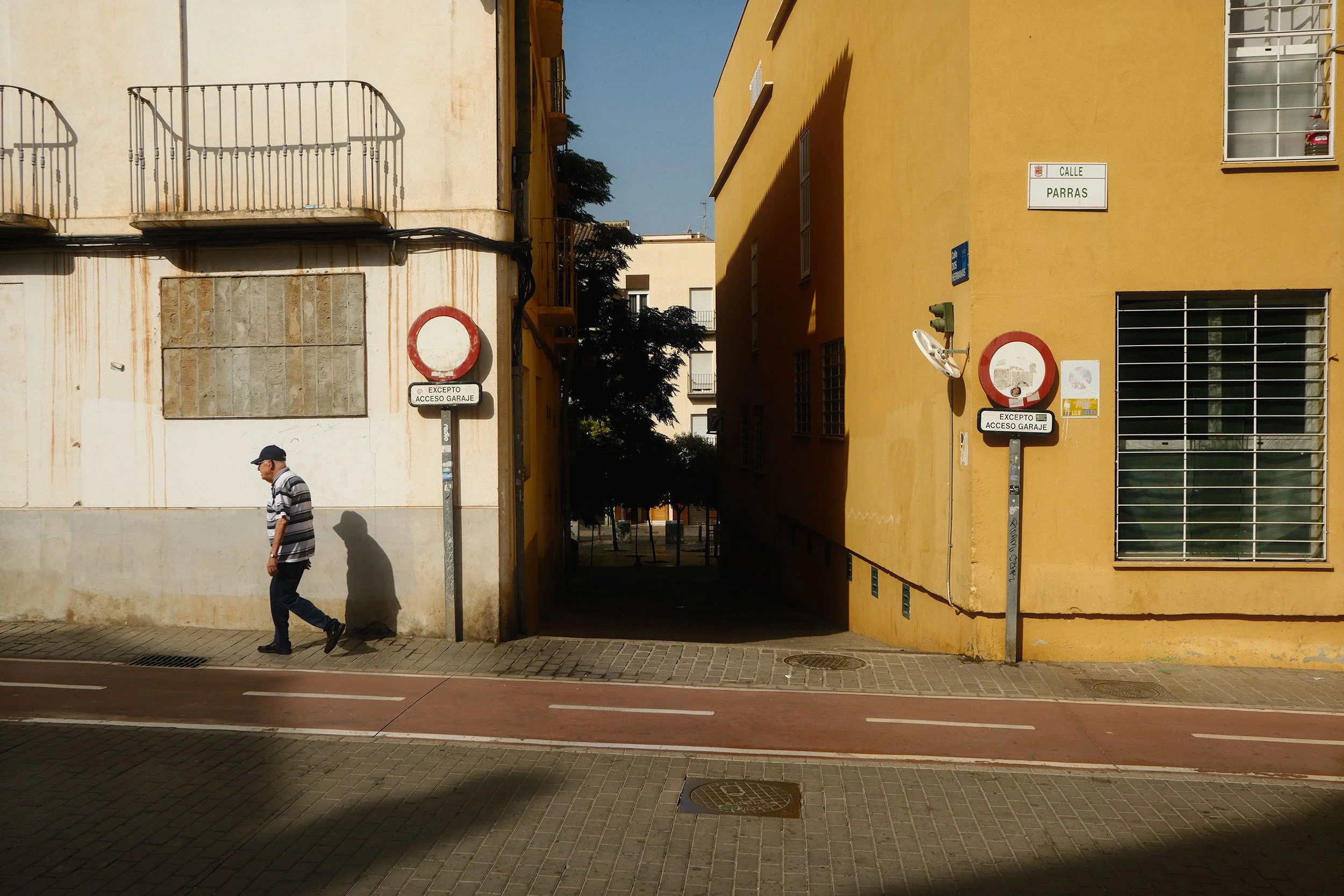
Malaga, Spain
RAW vs JPEG
RAWs are superior photos for the flexibility they provide. No surprise here. However, I used the captured JPEGS for 98% of the finalized photos. A JPEG file can still be processed in Lightroom and Photoshop, so it won’t compromise the image if a slight exposure adjustment, reduction in highlights, or increase in shadows is needed. That flexibility of a RAW file was not required here. I wasn’t doing any significant adjustments to the images.
I had mentioned that I would probably switch up my process. During the last few trips, I have captured both RAW and JPEG files, in case I needed the RAW or disliked the film recipe. However, that has not been the case; the JPEGs are great, and moving forward, I am considering capturing JPEGs only, as it will save a ton of memory space and be easier to work with when it comes to processing, storing, and sharing the images. I still believe RAW files are necessary, and when working on automotive projects, I will continue to prefer them. However, for travel and street photography, I see less and less need to have a RAW image. At least right now. That could always change later.
Photography is always about capturing images you are happy with first. Images you are pleased with contribute to the joy of photography, and if you are satisfied with what you are producing, there is no need to alter your approach. Currently, I’m enjoying the JPEG images I’m getting from the X-H2, as well as the various film recipes and simulations I’ve tried. I don’t experiment with many recipes; instead, I stick with 4-6 recipes I like, and I’ll continue doing so.