How Fujifilm Turned My Second Camera Into My Main One
There’s no shortage of articles, blog posts, and videos about changing camera systems; photographers selling everything and jumping to something new. Sometimes that kind of reset makes sense. A fresh system can be an effective (and occasionally expensive) way to reignite your creativity, break out of habits, and show you how other brands approach photography. Of course, every new system comes with a learning curve, and it takes time to figure out its strengths, weaknesses, and quirks.
The tricky part is that systems never stop evolving. New bodies appear every year with new specs, new features, and new, often higher, price tags. Swapping systems can be a real gamble, especially if you have to sell one kit to fund another. Once you’ve jumped, going back usually isn’t simple.
I’m always interested in reading about those transitions. When a photographer I trust moves from Fuji to Sony, or takes the leap into Leica, I want to hear why. I want to hear about their experience. If you’ve followed any photographer for a while, you see their growth through these phases: the trends they chase or ignore, the life changes they go through, and the tools they use to document everything along the way.
A Gradual Transition
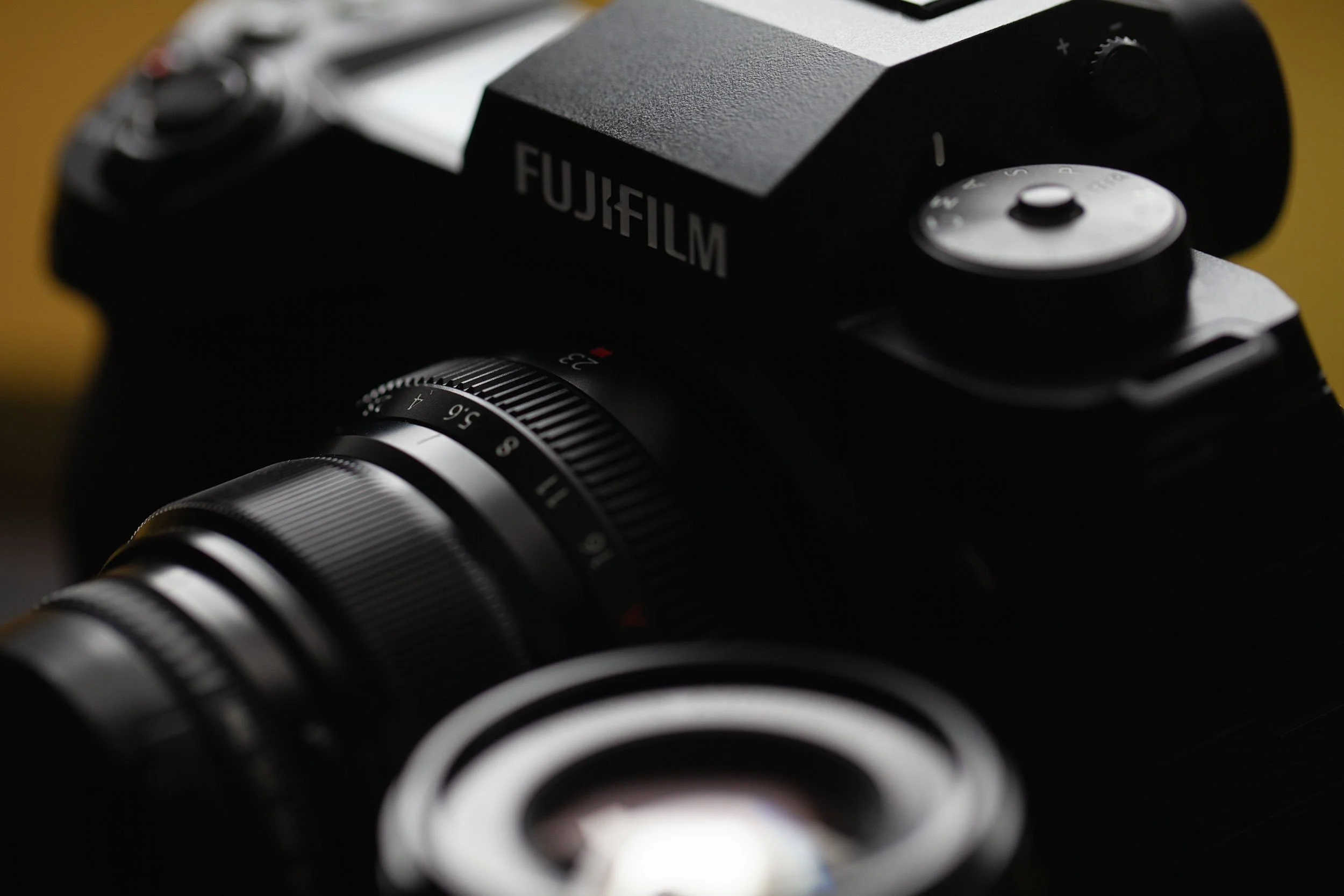
Personally, I don’t switch cameras very often. Over the last decade, I’ve only really used Canon and Fuji. I’ve heard great things about Sony, and Leica is definitely something I’d love to try one day, but the cost? Not for me right now. The funny thing is, I never set out to “switch systems.” I just needed a small, affordable second camera for travel, and the X‑E2 made more sense than what Canon had available at the time. Now that I’m on my third Fuji, it’s probably obvious I enjoy using them.
At first, the X‑E2 felt like the inferior option. I had one kit lens. The body was smaller, the megapixel count was lower, and it didn’t look as “serious” as my Canon, so I assumed it couldn’t be as good. But the images told a different story. Not only were they good, but I also started preferring them. The colours felt richer, the dynamic range seemed stronger, and I slowly realized megapixels didn’t matter. Most of what I was doing ended up online, and I wasn’t making huge crops anyway. Having the X‑E2 alongside my primary camera gave me a live comparison and a low‑risk way to see what was possible. I didn’t have to give up my existing system overnight. Over time, I just found myself reaching for the Fuji more and more, and now I’m almost exclusively a Fuji shooter.
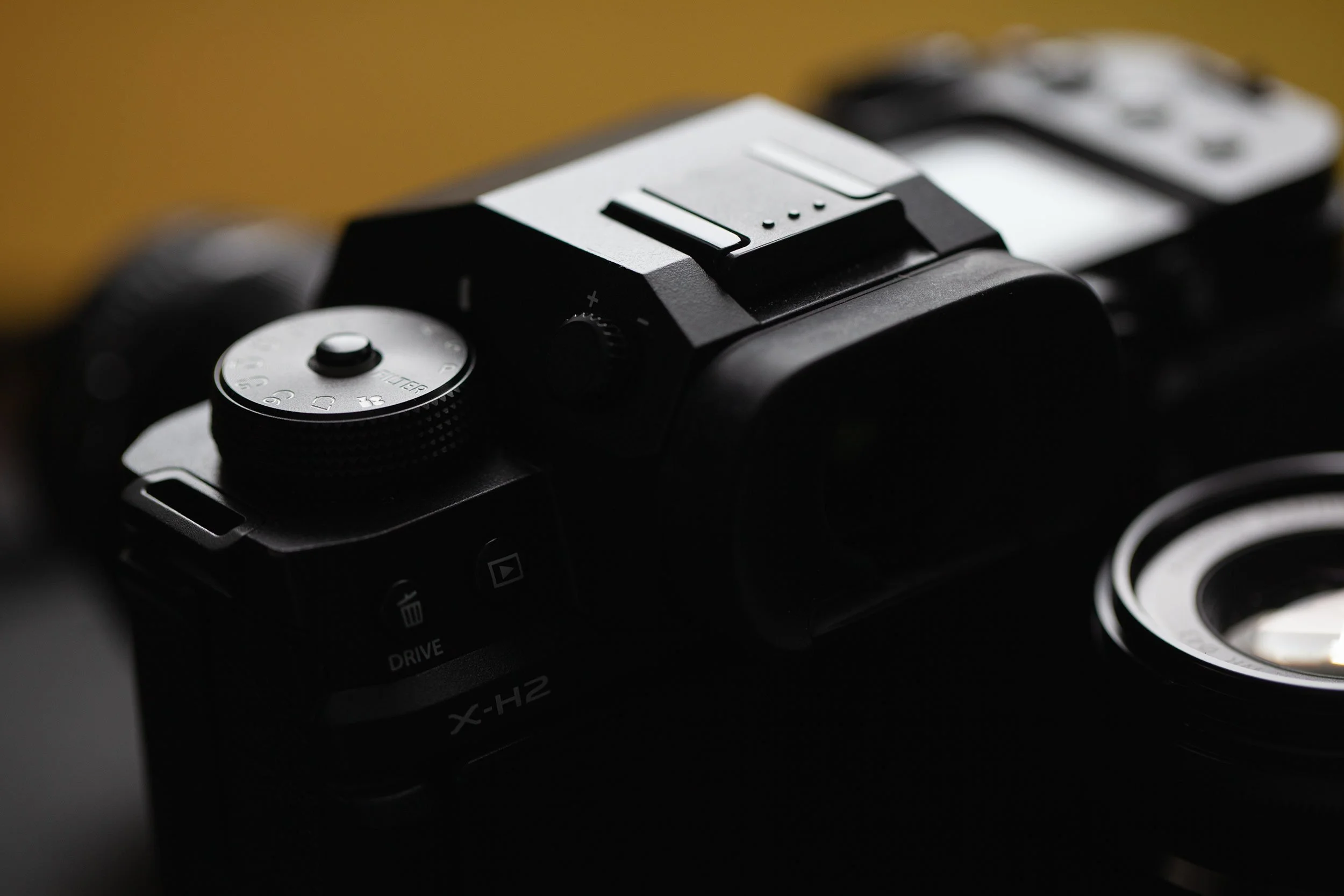
Switching gear can be surprisingly disorienting. The first time you pick up a new system, you notice how much of your shooting relies on muscle memory. Buttons feel “wrong,” dials are in unfamiliar places, and menu layouts can be baffling. That was my experience with Fuji’s menu at the start; I found it confusing for a long time. But nothing about the menu changed. I just spent enough time with it that the quirks started to feel normal, and now I think it’s actually pretty good!
When I look back at my early trips, I can’t quite believe what I used to haul around: a DSLR and up to three lenses, including a 70–200mm. I must have been exhausted carrying all that gear. That was just how it was 15 years ago. Big cameras and big lenses were almost a status symbol. You looked the part; people assumed you knew what you were doing. In reality, I didn’t. I was new to travel and terrified of missing a shot because I didn’t have the “right” lens. The gear felt reassuring, but it was also cumbersome, and over time, I realized I didn’t actually need all of it. These days, I’m much happier working within constraints. It’s lighter, physically and mentally. I show up with what I have and ask a more straightforward question: this is the scene, how can I compose with the lens that’s on my camera right now? For me, that’s a far more enjoyable way to do travel photography.
Conclusion
Switching systems does not have to be immediate; it can be part of gradual growth. Sometimes a new camera really can shake you out of a rut, but just as often, progress comes from limiting your options, learning your current gear deeply, and being honest about what you actually need. My move toward Fuji happened gradually, with low risk and a lot of curiosity. That slow transition, paired with a willingness to carry less and embrace constraints, has done more for my photography than I could have imagined.