Peggy’s Cove: The Coastal Beauty and Nova Scotia’s Icon
Peggy’s Cove and the iconic Peggy’s Point Lighthouse are among the most recognized and frequently visited landmarks in Nova Scotia. The area around Peggy’s Cove has some exquisite coastal scenery, a fascinating fishing village atmosphere, and the iconic Peggy’s Point lighthouse at the entrance to St. Margaret’s Bay.
To get to Peggy’s Cove, there are two routes: Peggy’s Cove Road and Prospect Road, which form a loop meeting at the cove’s entrance. Of the two, Peggy’s Cove Road is probably the more scenic, as it runs along the shores of St. Margaret’s Bay, offering nice views with numerous photo opportunities. Along the road, you can also find shops, restaurants, and other sites.
I live about 35 minutes away from Peggy’s Cove, with the start of Peggy’s Cove Road only 10 minutes from home, which offers me an excellent opportunity to explore this scenic route, one that is especially interesting during golden hours around sunset. Exploring the coastline at this perfect time of day, with optimal weather, is an exceptional experience. There are plenty of views that make you want to pull over to photograph. With numerous classic homes and cottages, as well as fishing-related structures such as sheds, docks, and smaller commercial buildings, the road offers ample opportunities for exploration. Here are some images I captured from my recent drive.
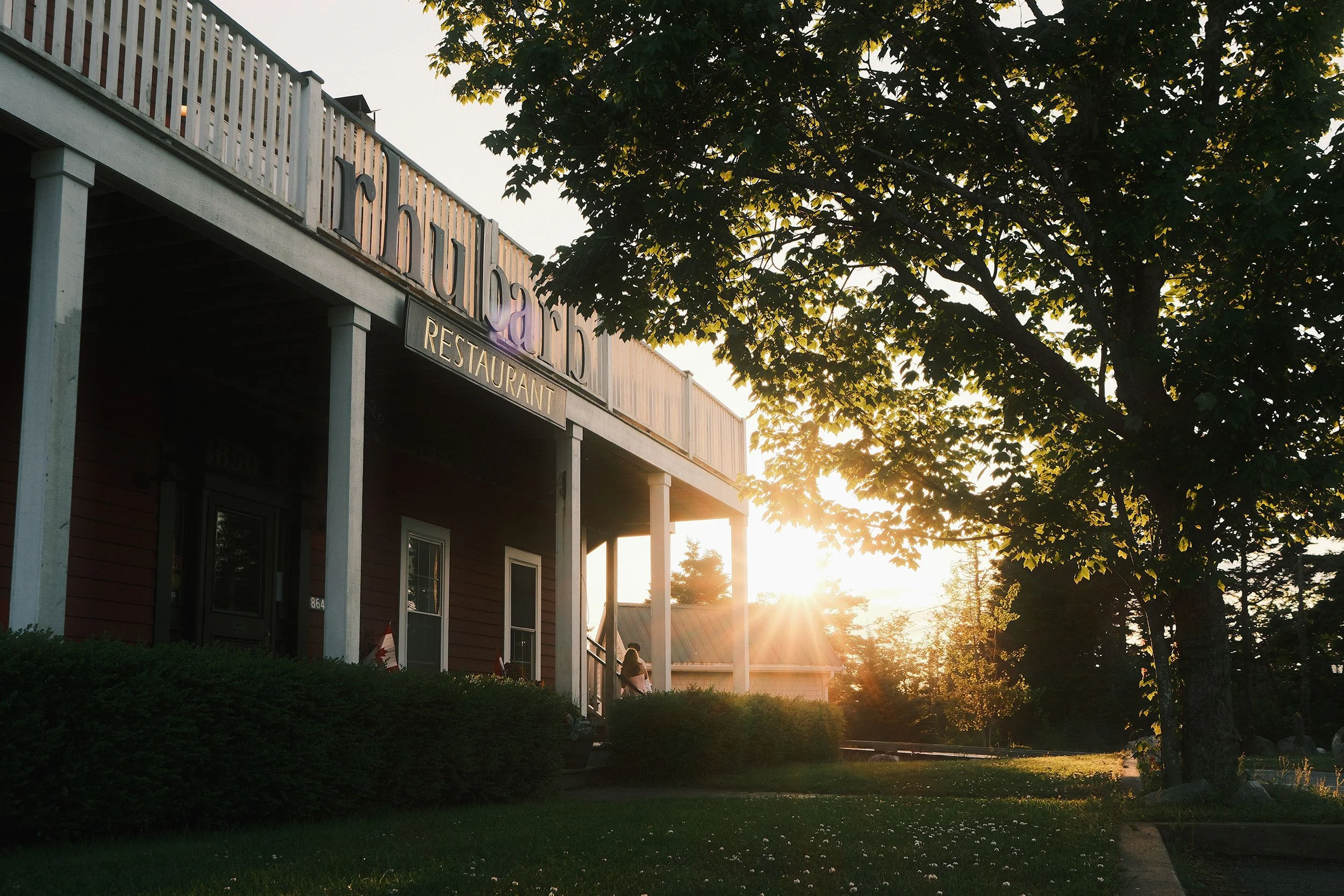
Rhubarb Restaurant - Indian Harbour
Photo 1 - Rhubarb Restaurant
Rhubarb Restaurant is located just a few minutes from Peggy’s Cove in Indian Harbour. It’s a popular place along the road and can’t be missed. It’s highly visible with adequate parking. At this time, the parking lot was empty, with all but one truck remaining (below). The Oceanstone Resort is located behind the restaurant, closer to the shoreline, and the truck could have been from someone staying or working there, as the restaurant was closed at the time.
I took the photo above, which emphasizes the warm light filtering through the leaves of the tree and the facade of the restaurant.
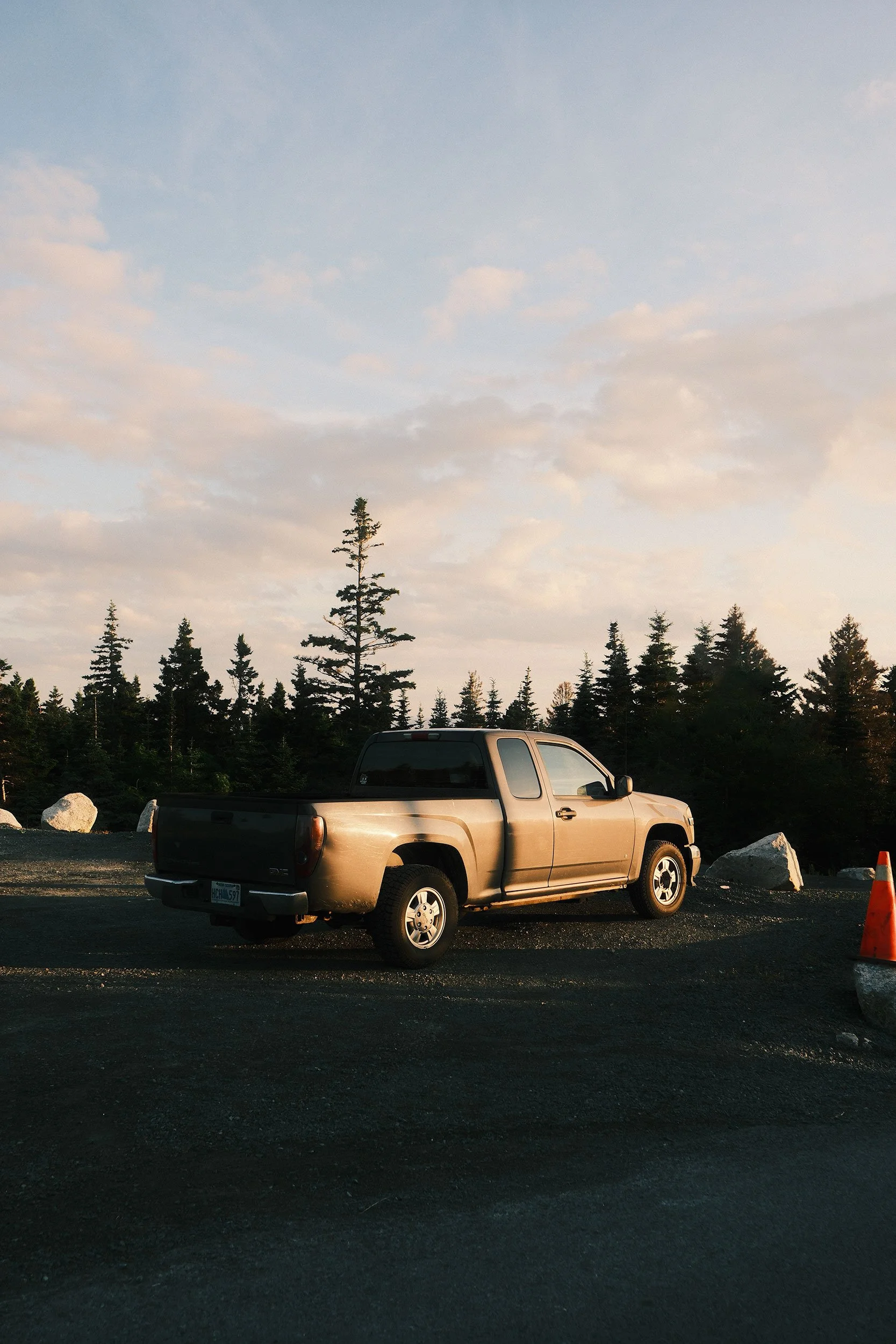
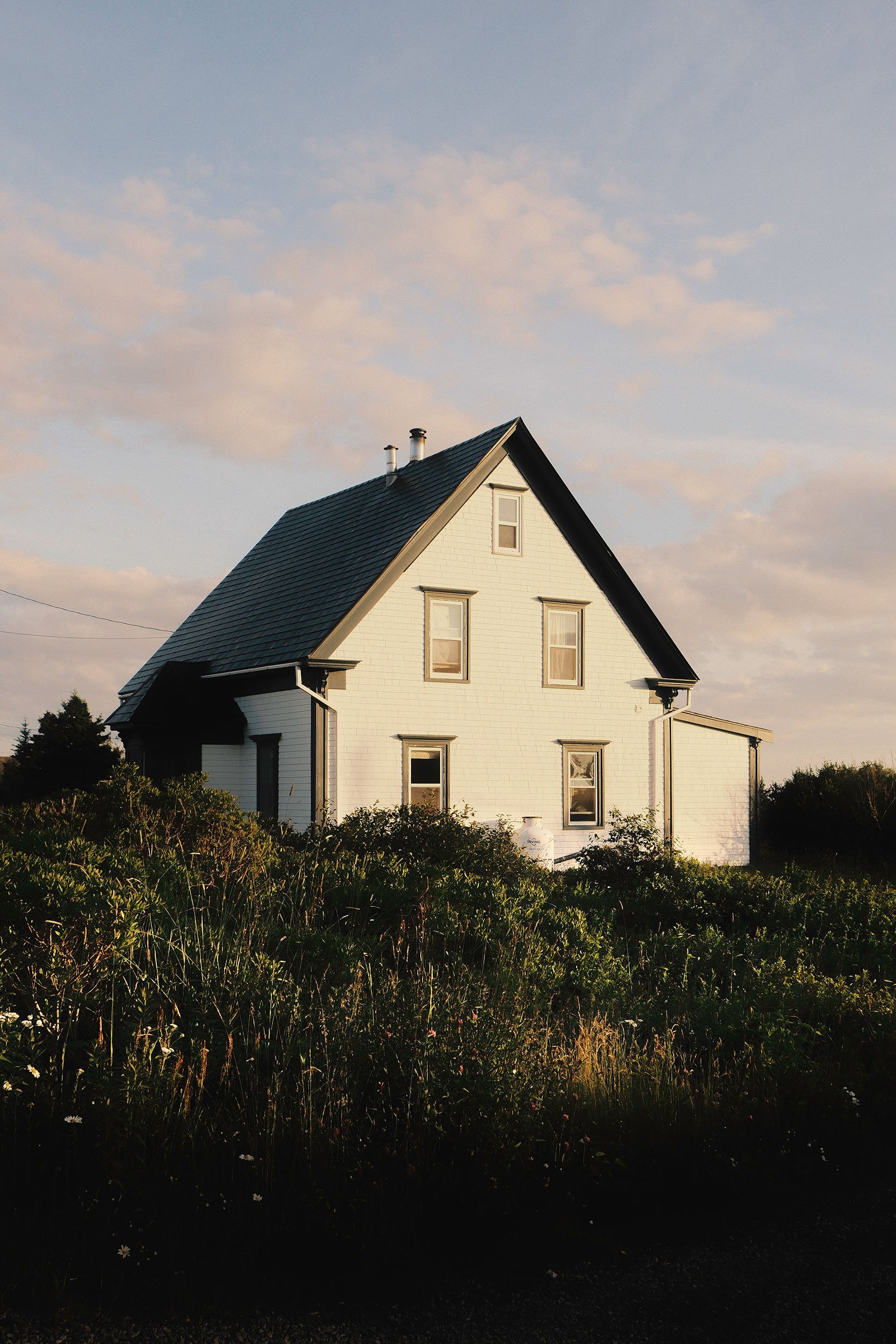
Photo 2 - GMC Canyon
Parked beside Rhubarb Restaurant in a modest gravel lot was this GMC Canyon. While it might not be the most interesting vehicle, something about it drew me in, especially how the light hit the side of the truck, casting a dramatic glow that brought out its character among the treeline behind. The composition is straightforward, but it fits seamlessly into the broader story of this evening, reflecting authentic Nova Scotia. It’s about the everyday elements that quietly define the region’s charm.
Photo 3 - Home
As I was driving along the road, this scene suddenly caught my eye just after I passed a line of trees bordering the roadside. It was one of those moments where the light combined with the home compelled me to turn around and loop back to capture it. The scene was straightforward: a traditional home bathed in the warm glow of the early evening sun.
The sunlight at this time of day was the defining element. It illuminated the facade with a brightness and warmth that elevated the scene beyond its everyday appearance. The home’s simple design and structure, characteristic of the region, blended perfectly with the natural light. I believe that if this had been a newer construction with a contemporary style, the image wouldn’t have communicated the same sense of place or timelessness, even under identical lighting conditions.
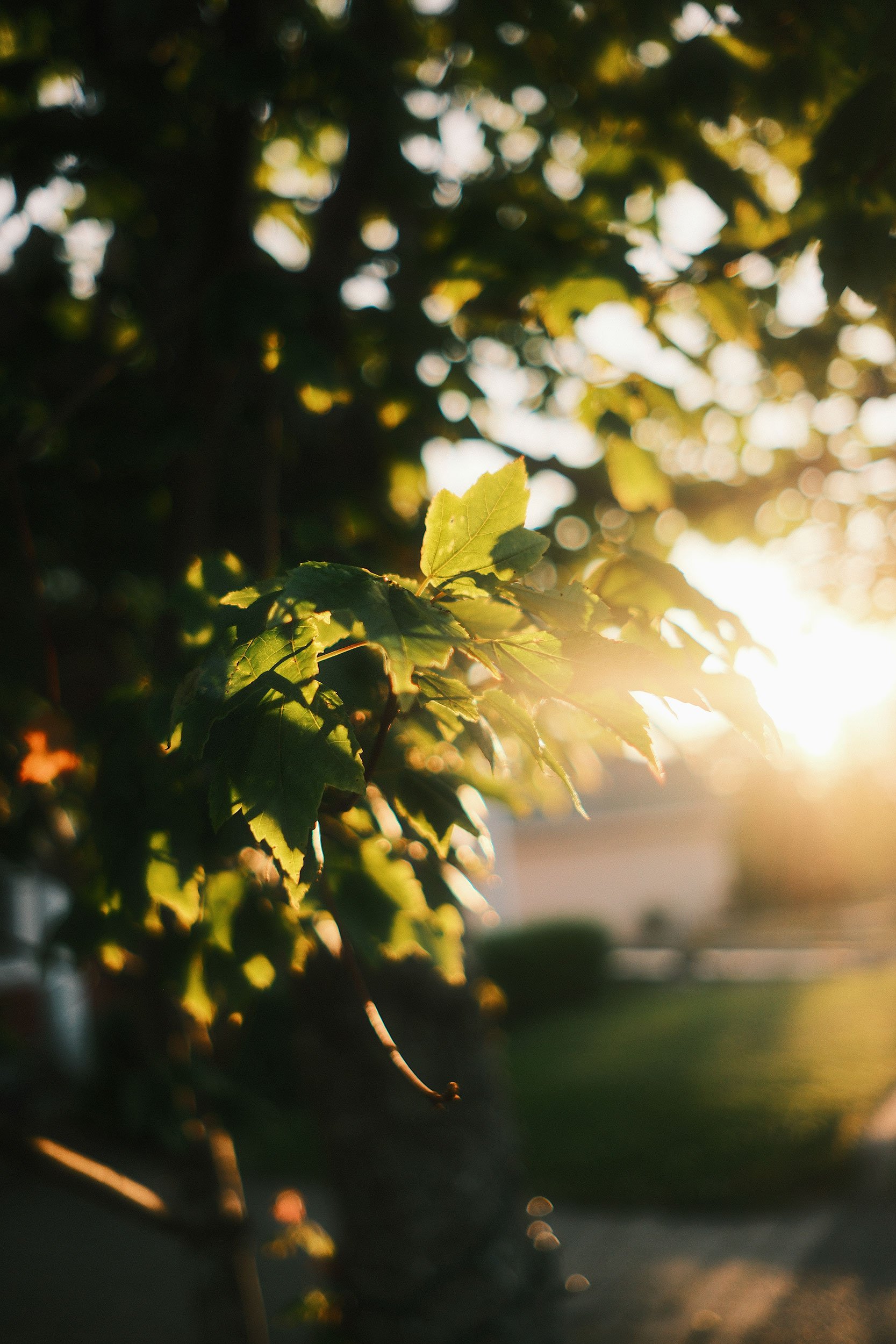

Photo 4 - Leaves
This photo was taken just outside the Rhubarb Restaurant, capturing the large tree that stands in front of the restaurant. I chose to shoot at an aperture of f/2, softening the focus. The result is an image that feels warm and inviting, thanks to the light. There is hardly any sharply defined element in the frame; instead, the soft blur creates an overall mood as the light filters through the leaves from the background, casting a glow.
Photo 5 - Boat Lines
I captured two versions of this scene, each with a different focal point. In one image, my focus was on the structure in the background. However, in this version, I chose to direct attention to the boat in the foreground, specifically the weathered lines around its bow. Something was compelling about the texture of the lines.
I felt the characteristics of the boat became a more engaging subject, keeping the background softly visible and recognizable, ensuring it provided important context without competing for attention. The building and surrounding environment remain easily noticeable, grounding the image and reminding viewers of the boat’s placement in its environment.
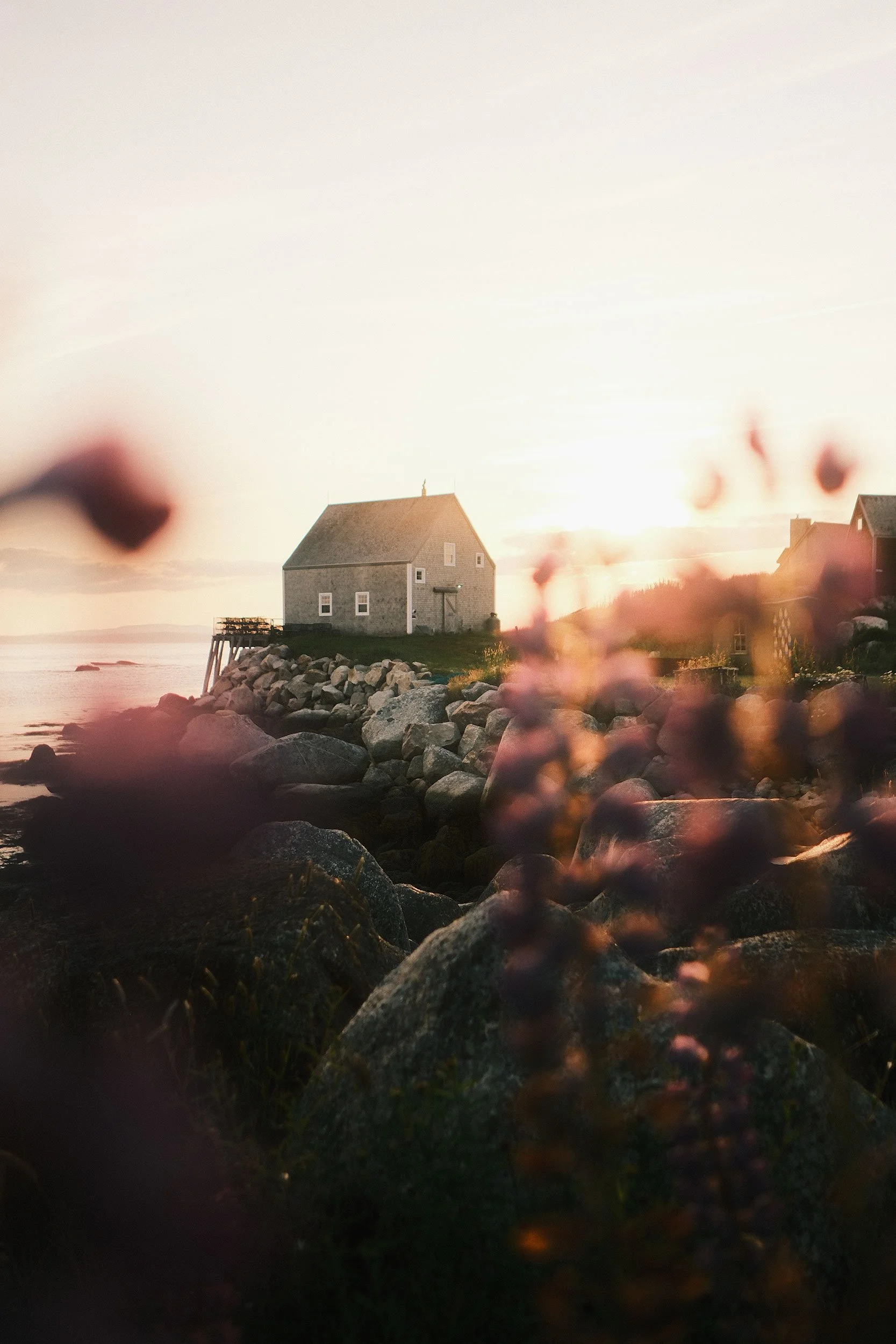

Photo 6 - Coastline
I pulled off the side of the road here, initially intending to photograph a series of similar shacks that dotted the coastline. These weathered structures seemed like the perfect subject in the warm glow of the setting sun. I took several landscape-oriented shots, but none of the images quite captured what I had hoped for. It was one of those moments when you think you know exactly what photo you want, only to realize that a better one is within an alternative composition.
Ultimately, I chose the vertical format because it allowed me to emphasize the verticality of the foreground elements. Shooting at f/2 gave me a shallow depth of field, which blurred the foreground to add depth to the image.
Photo 7 - Lupines
This is the same location as the previous photo, but I lowered the camera slightly and adjusted the focus to the lupines in the foreground. This shifts the focal point. I loved how the light created a defined outline of the lupines, which makes it stand out from the background and emphasizes its importance in the composition.
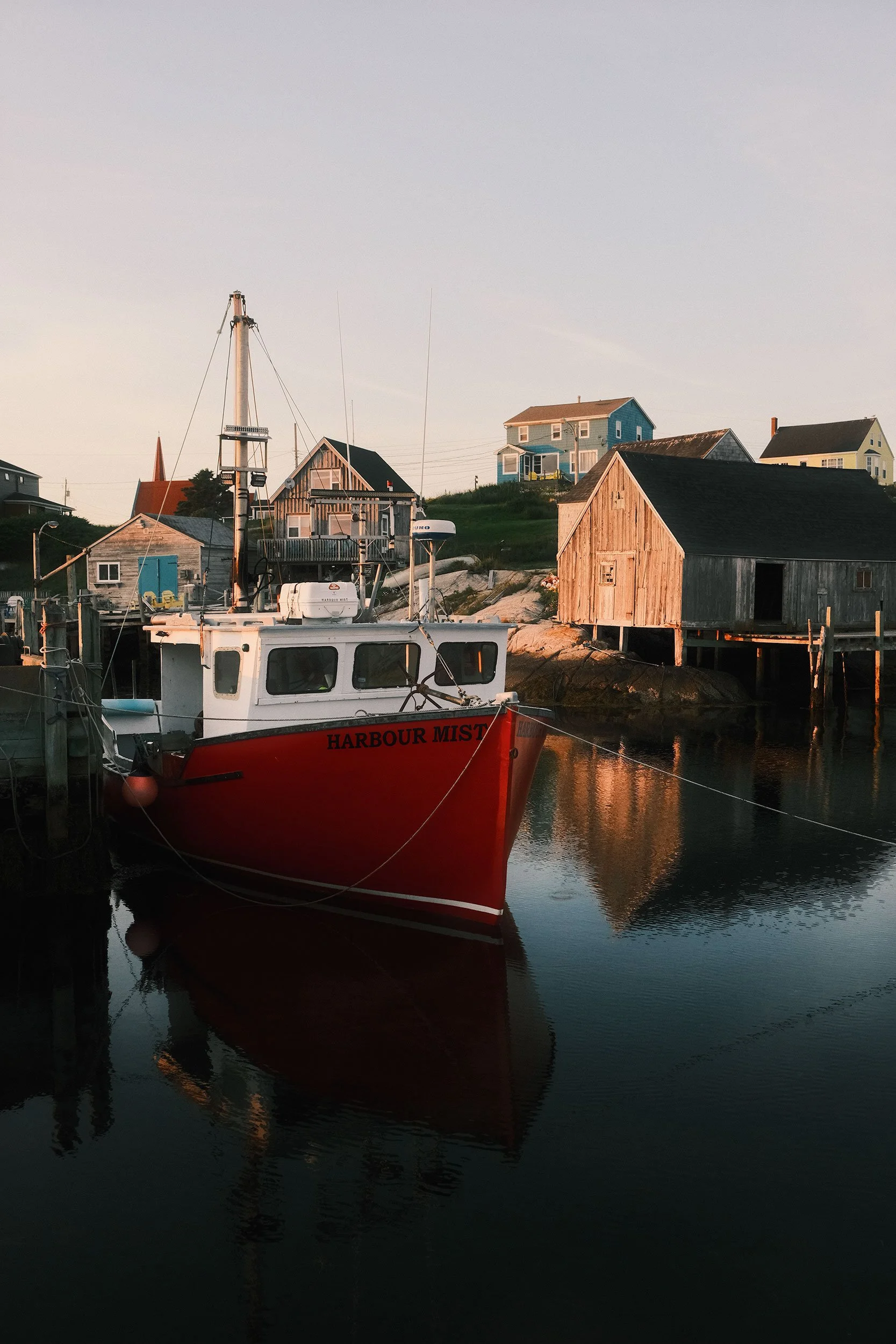

Photos 8 and 9 - Peggy’s Cove
As I finally arrived at Peggy’s Cove, the golden hour was in full swing, and the light was beginning to descend towards the horizon. It was perfect timing and precisely when I wanted to be there. The light at Peggy’s Cove, especially during sunset, can be sensational.
These two photos were captured within seconds of each other. The first image, in particular, is emblematic of Peggy’s Cove, a familiar composition that captures that quintessential view of the village. There’s a reason why these scenes are so compelling and why this specific composition of the village has become iconic. It’s because they offer a fantastic, timeless representation of what Peggy’s Cove has always been and what it proudly remains today.
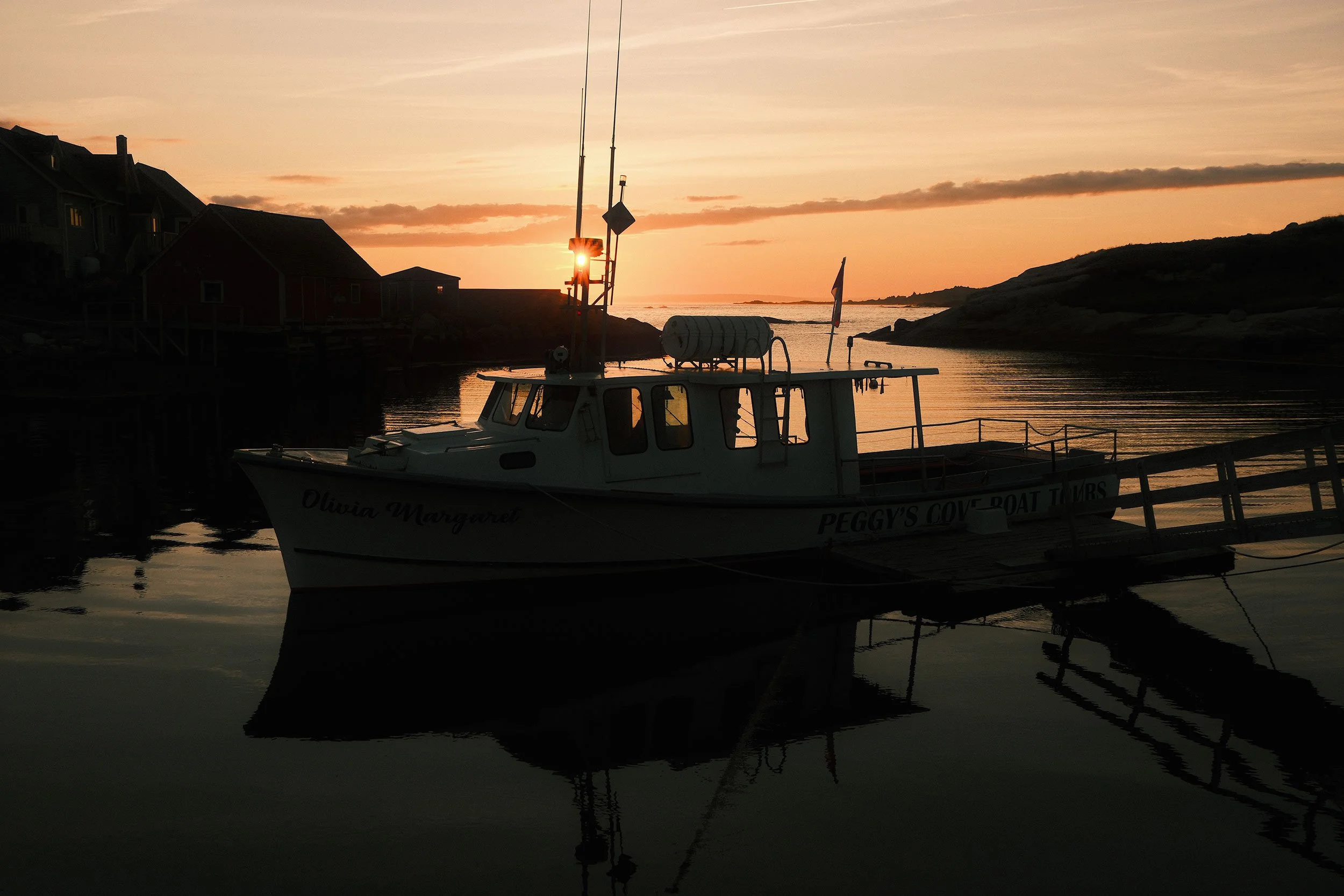
Photo 10 - Peggy’s Cove Silhouette
As I mentioned earlier, I arrived at Peggy’s Cove at just the right moment. The sun was low, hovering not far above the horizon, bathing the scene in warm, fading light. In this photo, you can see the sun’s position, signalling that there was only a limited window of time before it would slip below the horizon and the light would vanish.
I’ve taken photographs here numerous times before. However, this time I decided to reduce the exposure compensation to intentionally underexpose the image drastically. It was a bit of a gamble as I wasn’t sure if the effect would work as I envisioned. The silhouetted composition centers on the boat, which, despite the low light, retains just enough detail to make it unmistakably the focal point. Positioned directly in the center, the boat anchors the image and draws the viewer’s eye. Beyond it, the background fades into near-complete darkness, with only the faintest outlines visible. This lack of detail in the background guides the eye toward the horizon and the sun’s last light.
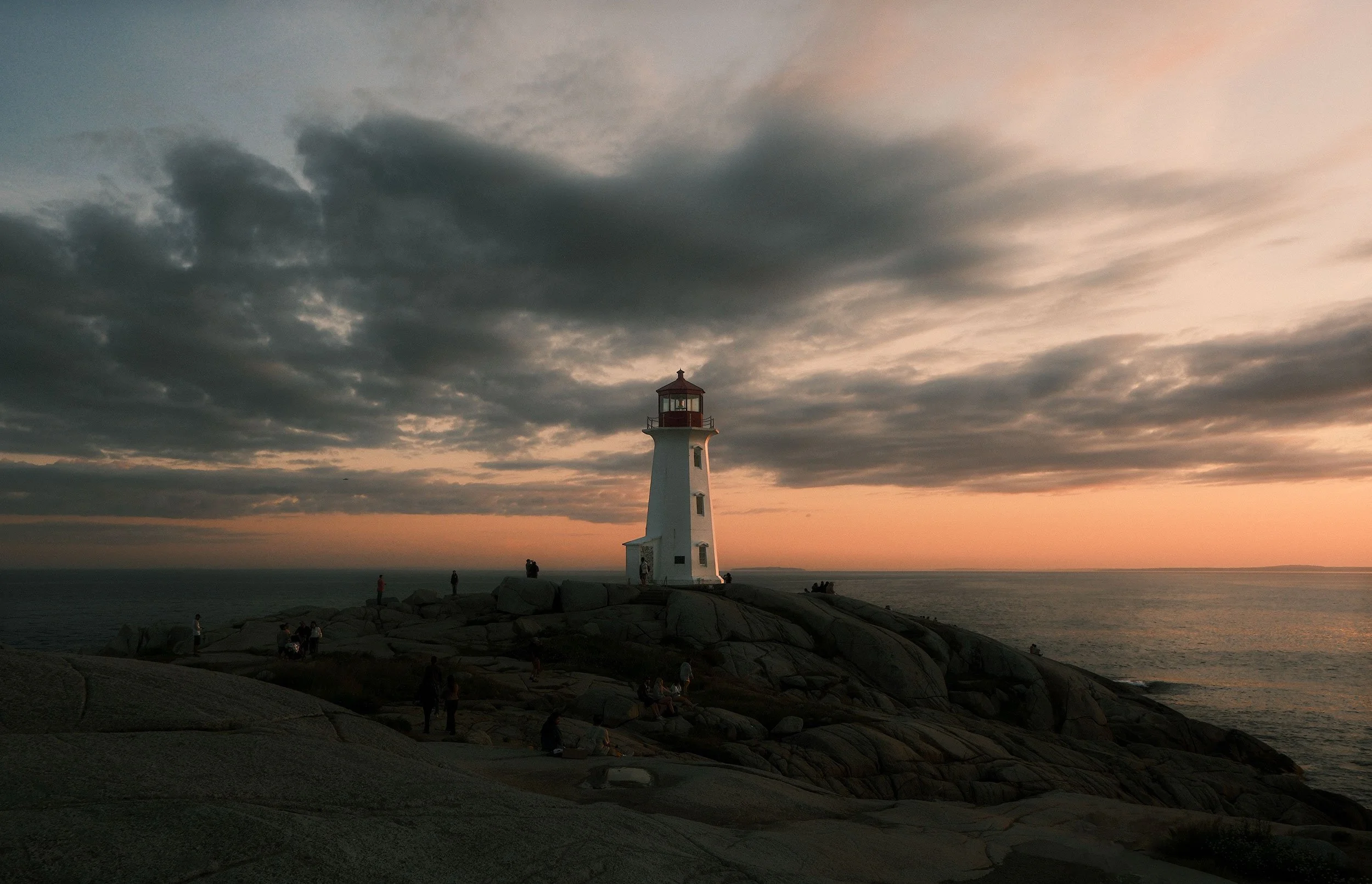
Peggy’s Point Lighthouse
Photo 11 - Peggy’s Point Lighthouse
This final image marks the conclusion of this short journey and the last stop of the evening: the iconic Peggy’s Point Lighthouse. I had set out with the intention of ending the day here. Knowing that this lighthouse is not only the most recognizable landmark in Peggy’s Cove, but also a perfect image to cap it off. As the sun began its final descent, casting its last light before dipping below the horizon, the scene was alive with anticipation for the sunset. As you can see in the photo, the area around the lighthouse is dotted with numerous people gathered along the rocks.
This is one of those moments where the presence of people adds depth and authenticity to the image. If this photo were intended purely for media or advertising purposes, the people would have been removed to create a cleaner, more solitary composition.
The people in the frame, in my opinion, enhance the story. On a perfect evening like this, it would feel unusual to see the lighthouse without anyone else there to appreciate it.
Conclusion
Peggy’s Cove stands as one of the most iconic and beloved symbols of Nova Scotia, and I consider myself fortunate to live just a short drive away. While many visitors focus solely on the lighthouse and the village itself, the journey along the roads to and from Peggy’s Cove often goes unnoticed, but it shouldn’t be. This stretch of road is dotted with numerous sights and scenes, each offering its unique glimpse into the coastal beauty, culture, and history.
Suppose you ever have the chance to visit Peggy’s Cove. In that case, I highly recommend setting aside time not just for the destination but also to explore and appreciate the landscape and stories that unfold along the way. It’s this combination of journey and arrival that genuinely captures the spirit of Nova Scotia, making a visit to Peggy’s Cove all the more memorable.