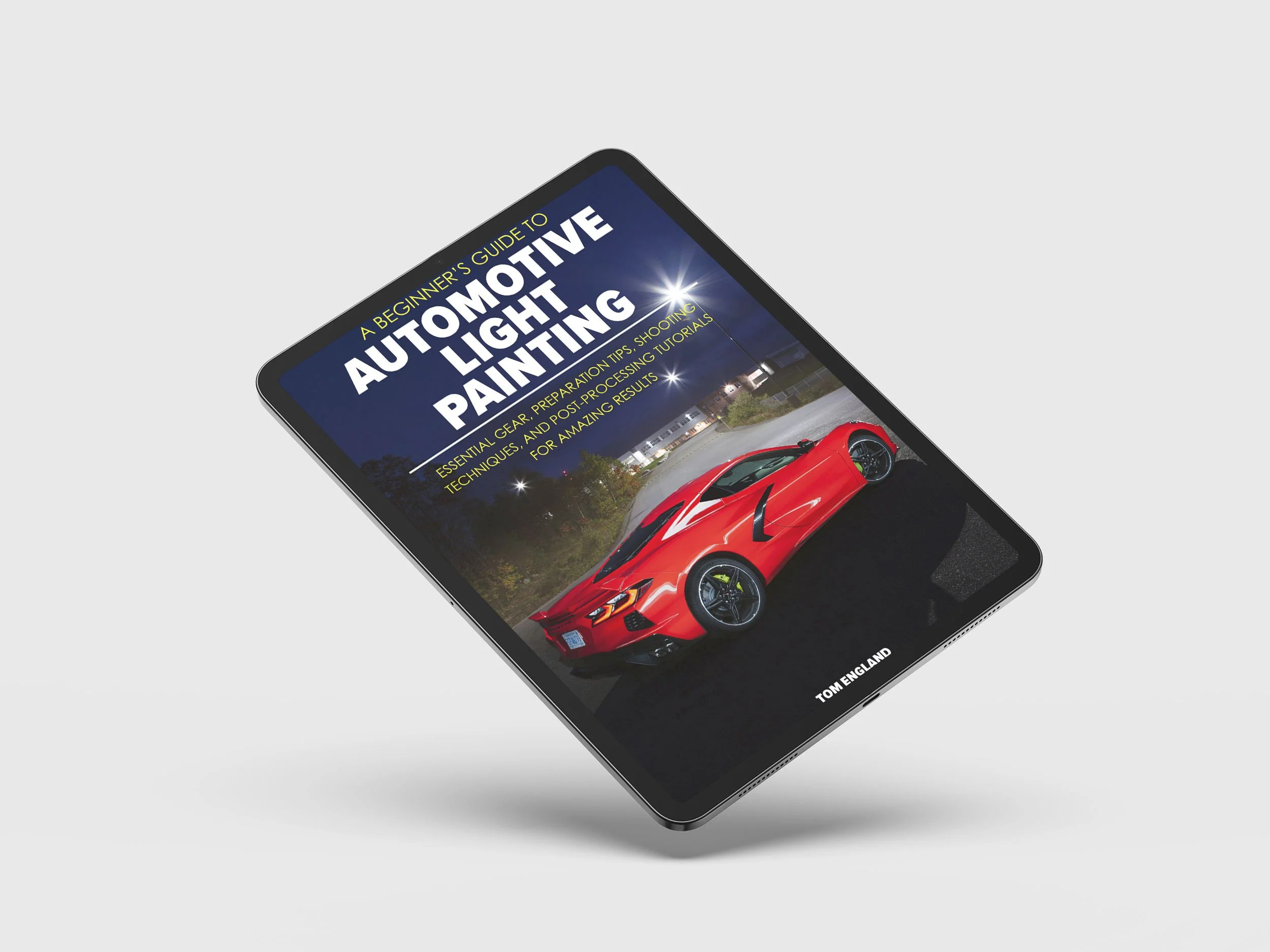
I’ve been using light painting in my automotive photography for over 10 years now, and it’s still an exhilarating opportunity when presented. The process is an excellent option for automotive photographers to add to their repertoire, if they haven’t already, as it offers a very unique way to showcase vehicles and can be very enticing to clients.
The advantage of light painting is that it doesn’t require much additional gear. The camera and lenses you use now will probably work just fine, and if you already have a quality tripod, you’re almost there. All you need is a light wand. Once you have those four items, along with a car and a safe, dark location, you’ll have everything you need to start exploring automotive light painting.
Throughout this blog, I’ve written numerous times about light painting, sharing techniques and tips that you can find by browsing the Car Photography category, and late this summer, I began taking notes and jotting down ideas: topics I’ve covered already, and others I haven’t, working towards a framework for something more extensive; something that covered everything about light painting in one place.
As a result, I’m nearing completion of my new book. The book will be eight chapters, and although it’s not 100% finalized yet, topics include the fundamentals of light painting, what light painting truly is, how it works, and the importance of maintaining consistent movement during exposure. It also covers how varying light heights, high, mid, and low, and how settings like shutter speed, aperture, and ISO all come together to shape the final image. We’ll discuss gear: camera and lens choices, the importance of a solid tripod, and tips for using light-painting tools effectively. There is practical advice on preparing vehicles and locations, choosing the right location, balancing background elements, and handling specific challenges, such as lighting dark cars or black wheels. You’ll also learn why specific car colours are easier to paint with light and how to make composition choices that highlight your vehicle’s best features. In addition, we’ll look at examples of car exterior and interior, and walk through the process of layering and masking. There will be more topics to cover, but it will act as a perfect framework for light painting, building off the foundations.
Light painting is an art, and I’m pleased with the results I get. I’m always trying to refine the craft to elevate my car light painting photography. After close to 10 years, I’m in a comfortable spot to introduce the light painting concept to those curious about it and those just getting started, detailing what’s required, what’s involved, and the steps to achieve consistent results. A gateway into light painting.
This guide is designed for beginners. It aims to make the process feel logical and approachable, helping you understand each step so you can work with more confidence and intention during a shoot. By understanding the content and following the techniques in this book, you will be better prepared to plan your sessions, execute your light passes, and refine your images in post-production. The goal is to equip you with the skills to create striking, polished results from your automotive photo shoots while enjoying the creative process.
The eBook will be released in early 2026 and will be available in my shop. I may do a small print run as well, as I feel it could be a nice, tangible handbook to throw in your camera bag. If that happens, details to follow.